
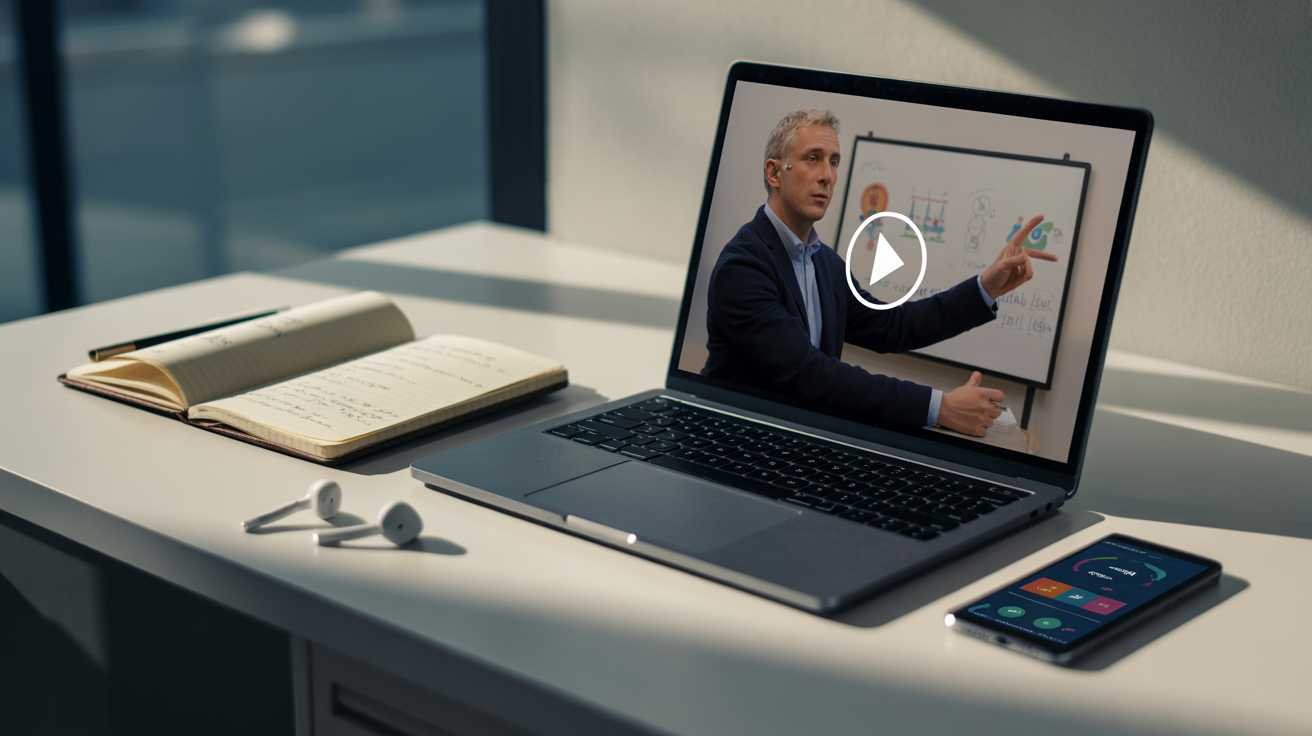
The New Frontier of Education in the Workplace
Imagine stepping into a modern office where employees are no longer bound by dusty manuals, monotonous PowerPoint slides, or uninspired training sessions. Instead, screens flicker with vivid color, energy, and life. Teams are fully immersed in video-based learning experiences that simulate real-world challenges, ignite creativity, and anchor new concepts deep into memory. The revolution of education workplace strategies is unfolding now, and companies that fail to adopt this trend risk being left behind in a world where attention spans are fleeting and competition for top talent is fierce. Video-based learning isn’t just another digital fad – it’s the most effective tool for improving retention and engagement in fast-paced work environments. As industries evolve, this method is becoming the essential lifeline connecting employees with vital skills and insights they must master to stay ahead. Every second counts in today’s business race, and the organizations embracing video learning are sprinting toward success while others stumble in outdated modes of instruction. Those who wait will soon realize that the future of workplace education is not written – it’s streamed.
Why Traditional Training Fails in the Modern Business Environment
Traditional corporate training often feels like a relic from a bygone era. Long sessions, static slides, and dense text-heavy materials cause eyes to glaze over and minds to drift. Learners absorb fragments of knowledge but fail to internalize skills deeply enough to apply them effectively. The truth is that most employees today live in a video-first world – streaming tutorials, social media reels, and short-form educational content dominate their digital consumption. They crave engagement, visual storytelling, and emotional resonance. When training fails to meet that expectation, the disconnect grows. The energy of a room fizzles out, morale sinks, and retention plummets. In contrast, video-based learning embraces the natural rhythm of modern attention and curiosity. It mirrors how we already learn outside of work, translating seamlessly into professional development. The education workplace of the future is adaptive, visual, and emotionally charged, pushing past passive instruction toward interactive, personalized experiences. Companies that cling to static methods risk not only disengagement but also higher turnover, as employees seek organizations that invest in dynamic, motivating learning ecosystems. The era of dull seminars is over – the clock is ticking for businesses to evolve.
The Power of Visual Storytelling in Employee Learning
Humans are hardwired to respond to stories. From ancient cave paintings to today’s viral videos, visuals paired with narrative have always been the most powerful form of communication. In the education workplace, storytelling through video transforms abstract information into emotional experiences. When employees see real scenarios unfold – whether it’s a customer service challenge, a safety procedure, or a leadership dilemma – they connect emotionally and mentally, retaining lessons far longer than through text alone. Video enables learners to observe body language, tone, and nuance – details impossible to convey in print. Imagine a new hire stepping into a digital training series that feels cinematic: the hum of an office, the rhythm of teamwork, the pulse of real challenges playing out in front of them. That sensory immersion sparks both empathy and understanding. They don’t just learn company values – they experience them. Research confirms that people remember up to 95% of a message when it’s delivered through video, compared to just 10% when reading text. This is not coincidence – it’s cognitive science in action. Storytelling visually lodges knowledge where it belongs: in long-term memory.
Leveraging Microlearning for Maximum Impact
In a world drowning in information overload, microlearning has emerged as a game-changer. It slices learning into sharp, digestible moments that employees can consume quickly without breaking their workflow. Imagine receiving a short, three-minute video explaining a new product update just before a client meeting – fast, relevant, and immediately applicable. This precision-driven approach not only fits seamlessly into daily routines but also reinforces retention through repetition and contextual timing. Microlearning is especially powerful in the education workplace because it mirrors how people naturally learn in the digital era – bit by bit, on demand, and on the go. The brevity doesn’t dilute impact; it amplifies it. Each video feels like a spark that keeps the flame of curiosity burning, encouraging continual growth. Organizations that implement this style of training report significant boosts in employee confidence, satisfaction, and performance. The beauty of video microlearning lies in its adaptability – whether employees are in the office, remote, or in the field, they can access concise, targeted content tailored to their exact needs. The message is clear: small videos, big results.
Harnessing Interactivity to Deepen Engagement
Passive watching can only go so far. The next level of video-based learning lies in interactivity – where learners are not just viewers but participants. Picture training sessions that pause to ask questions, challenge decision-making, or allow branching scenarios where each choice alters the storyline. Suddenly, training becomes a personalized adventure rather than a one-size-fits-all broadcast. This interactive edge keeps attention locked in, stimulating the brain’s reward systems and reinforcing retention. It transforms the education workplace into a responsive ecosystem where feedback is immediate and progress measurable. Interactive elements, like quizzes embedded in videos or real-time response dashboards, create a loop of active participation. Employees are not just informed – they are involved. Companies adopting this model are witnessing a surge in completion rates and engagement metrics. In the competitive landscape of talent development, interactivity isn’t a luxury; it’s a necessity. The more sensory and dynamic the experience, the more lasting its impact. This is learning not as a chore, but as a challenge employees are excited to conquer.
Creating a Culture of Continuous Learning Through Video
When video-based learning becomes woven into the fabric of company culture, transformation follows. Continuous learning is not a one-time event – it’s an ongoing rhythm that pulses through daily operations. The education workplace thrives when learning becomes a shared, celebrated experience. Imagine employees eagerly anticipating new video updates from leadership, peer-to-peer tutorials, or gamified challenges that recognize top performers. These videos become more than tools – they become stories that define the organization’s collective growth. A culture rooted in continuous learning enhances not only skill development but also loyalty, trust, and innovation. Employees feel valued when they see their company investing in their intellectual and emotional growth. Video content can also bridge global teams, making communication fluid across time zones and cultures. It democratizes knowledge, allowing every voice to participate, every perspective to be seen. The companies leading this shift are proving that when education becomes culture, performance becomes unstoppable. Those who resist this movement risk stagnation, while those who embrace it will set the pace for the future of work.
Real-World Success Stories of Video Learning Transformation
Across industries, video-based learning is rewriting success stories. Tech companies are using simulation videos to onboard developers with complex systems. Retail chains deploy scenario-based clips to train staff on customer experience excellence. Healthcare providers employ immersive visual modules to teach critical procedures, ensuring safety and accuracy. In every example, results are measurable – higher retention, fewer mistakes, faster adaptation. A leading example is LinkedIn Learning, which showcases the undeniable power of accessible, verified, and engaging video training. Employees across the globe credit it with reshaping their professional paths. Verified data shows that organizations implementing structured video learning programs experience up to 50% higher engagement rates than traditional methods. The education workplace is no longer static – it’s alive, visual, and measurable. With licensed, secure content, verified certifications, and responsive customer support, video-based learning platforms deliver both trust and transformation. These success stories underline a single truth: video learning is not just improving training – it’s redefining what it means to learn in the modern workplace.
Ensuring Compliance, Security, and Verified Outcomes
In an age of digital transformation, concerns about compliance and data integrity are more crucial than ever. Forward-thinking organizations demand secure platforms that safeguard sensitive content and verify learner identities. The best video learning systems meet strict licensing and regulatory standards, offering encryption, access control, and tracking transparency. This builds confidence across the education workplace, assuring employees and executives that training data is both accurate and protected. Verified assessments and certifications add another layer of credibility, empowering professionals to showcase measurable growth. The most advanced solutions even integrate with HR and LMS systems, providing seamless analytics for leadership to assess ROI. Reliable customer service and verified payouts for accredited learning modules further boost trust. Employees want to know their time translates into tangible recognition; organizations want assurance that every learning minute counts. This dual transparency fuels motivation and loyalty. Investing in secure, verified video learning is not optional – it’s the cornerstone of sustainable workforce development in an increasingly compliance-driven world.
The Future Is Now: Seize the Moment for Workplace Transformation
The window for innovation is narrowing. Each month, more organizations are adopting video-based learning as the heartbeat of their development strategies. Those who delay risk losing top talent to competitors that prioritize growth, engagement, and forward-thinking culture. The education workplace is no longer about passive consumption – it’s about immersive experience, active participation, and lasting transformation. Every business leader faces a pivotal decision: evolve now or fall behind. The tools exist, the data is proven, and the audience – your employees – is ready. Video-based learning offers not just training, but a living, breathing ecosystem of development. It’s scalable, measurable, and irresistibly engaging. The time to act is now. Don’t let your organization fade into irrelevance while others surge ahead. Ignite your workforce with the power of sight, sound, and story. Make every moment of learning unforgettable. Start building your video-driven training strategy today, and watch as knowledge retention, motivation, and innovation soar beyond expectation. The future of workplace education isn’t coming – it’s here, streaming live before your eyes.


