
The New Frontier of Hands-On Learning in the Digital Age
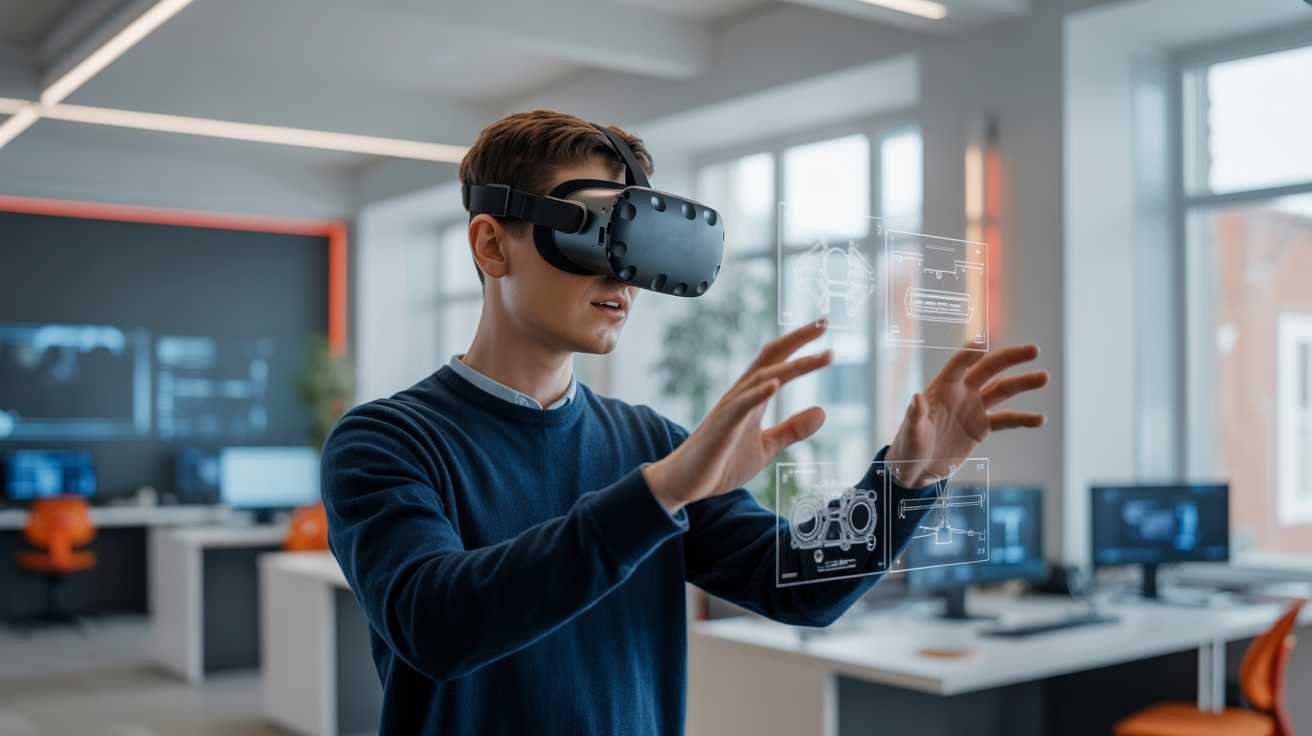
Imagine stepping into a fully immersive laboratory, where you can manipulate real-time data, handle virtual instruments, and feel the pulse of precision – all without ever leaving your desk. This isn’t a futuristic fantasy; it’s the reality unfolding now through virtual reality (VR) simulations in online education. The digital learning revolution has transcended the static screen, morphing into an interactive, sensory-rich environment where learners can master complex, practical skills. In disciplines like medicine, engineering, and biotechnology, this transformation is particularly urgent. Students are no longer content with theoretical slides – they crave real-world engagement. The rise of VR is answering that demand with astonishing immediacy. The global shift toward remote education after 2020 accelerated this movement, creating both a necessity and an opportunity. Those who act now – educators, institutions, and learners – will seize a competitive edge that traditional classrooms simply cannot offer. The surge of interest has been especially potent among aspiring specialists seeking niche careers, such as those exploring embryologist education requirements. For them, the capacity to simulate laboratory environments, master precision techniques, and gain experiential understanding through VR is not just convenient – it’s transformative. This is the moment to act, before the wave crests and early adopters secure their lead in the rapidly evolving digital education ecosystem.
Bridging the Gap Between Theory and Practice
For decades, the Achilles’ heel of online learning has been the inability to fully replicate hands-on experience. Reading about laboratory methods or watching tutorial videos could never compare to physically performing procedures. However, VR simulations are dissolving that boundary with extraordinary realism. Picture a student training to become an embryologist, reaching out to manipulate a delicate embryo under a microscope, adjusting magnification, recording cell divisions – all within a virtual lab that mirrors a real one down to the hum of background equipment. With every gesture tracked and translated into accurate movement, learners develop muscle memory and spatial awareness previously impossible to cultivate online. The gap between knowledge and performance narrows dramatically. Institutions that incorporate these VR systems not only improve retention but also increase student satisfaction and employability. The sense of immersion and authenticity draws learners in, creating emotional engagement and cognitive reinforcement. For students researching embryologist education requirements, VR brings to life the intricate world of fertility labs, where accuracy, timing, and environmental control are everything. With virtual practice, they can repeat processes until perfected, gaining confidence before they ever touch real specimens. Those who hesitate risk being left behind as more universities and certification programs integrate immersive learning modules, setting new benchmarks for what “qualified” truly means in digital-era professional education.
The Power of Immersive Sensory Learning
The human brain learns best through experience – sight, sound, touch, and even emotional involvement. That’s where VR-based learning excels, stimulating multiple sensory pathways simultaneously. The moment a student dons a headset, they’re transported into a world of 360-degree interactivity. They can see the virtual environment, hear ambient lab noises, and manipulate 3D models with tactile feedback gloves. This sensory layering produces deep learning that conventional e-learning cannot match. For example, when training under embryologist education requirements, a learner can examine fertilized eggs, adjust culture temperatures, and record results in real time. This process engrains procedural accuracy far more effectively than passive observation. Studies from top institutions show that retention rates for VR learners can soar above 75%, compared to only 10–20% for traditional online courses. These statistics aren’t just numbers – they represent tangible skill mastery and professional readiness. In industries where precision saves time, money, and even lives, that advantage is monumental. The urgency to adopt VR-enhanced education is growing exponentially. Students who start learning through VR now will emerge as confident, employable experts, while others still buried in outdated slideshows will struggle to compete. The time to experience the next level of learning isn’t tomorrow – it’s today.
Real-World Application and Professional Readiness
Employers in specialized scientific fields increasingly expect candidates to arrive job-ready. They want practical expertise, not just theoretical understanding. This is particularly true in sectors guided by rigorous standards, such as fertility science, biomedical engineering, and clinical diagnostics. For those pursuing embryologist education requirements, mastering laboratory processes in a safe, repeatable environment offers a career-changing advantage. VR simulations allow trainees to experience complex scenarios – such as embryo freezing, culture medium optimization, and time-sensitive fertilization protocols – without the risk of real-world error. This transforms learning into an iterative, feedback-driven process where failure becomes an opportunity for mastery rather than a setback. Leading education providers now integrate VR into credentialing programs, offering verified licensing pathways recognized by global institutions. Graduates emerge not only with knowledge but with demonstrable competence, often validated through data-driven performance analytics. These simulations record every motion and decision, enabling instructors to assess precision, timing, and judgment objectively. The implication is clear: those who invest in VR learning platforms today align themselves with the future of work, while those who cling to outdated systems risk irrelevance. The professional landscape is shifting, and it’s doing so fast.
Industry Validation and Technological Trust
The rise of VR in education is not speculative – it’s backed by major industry validation. Corporations like Meta, Google, and HTC have poured billions into refining immersive learning tools. Universities such as Stanford, MIT, and Imperial College London have reported measurable success in deploying VR-based curricula. This convergence of academic rigor and technological innovation has set new standards for digital learning environments. When applied to specialized training – especially for disciplines with stringent embryologist education requirements – these platforms offer secure, verifiable systems with encrypted data storage, biometric logins, and cloud-based performance tracking. Students can trust that their credentials and learning records remain protected and portable across institutions. Moreover, responsive customer service teams and real-time technical support make VR education not just reliable but seamless. The quality assurance frameworks surrounding these technologies ensure consistency and compliance with international education standards. As global accreditation boards increasingly recognize VR-based certifications, learners who enroll early are reaping tangible benefits – better job placement, higher pay scales, and stronger resumes. Waiting for VR to become mainstream is no longer an option; by then, the early movers will already have leveraged the advantage into dominant professional positions. The FOMO is real – and justified.
Breaking Barriers of Accessibility and Cost
Traditional education often comes with barriers – geographic, financial, and logistical. But VR technology is tearing them down at breathtaking speed. Instead of traveling across cities or continents to access specialized facilities, students can now enter fully equipped virtual labs from anywhere in the world. For those researching embryologist education requirements, this means gaining hands-on experience in procedures that once required expensive physical setups. The savings in travel, accommodation, and laboratory fees are enormous, making education more equitable and inclusive. The best part? VR hardware costs are dropping rapidly, and cloud-based access models make it easy for institutions to scale. Subscription-based platforms offer transparent pricing, verified payouts, and guaranteed access to updated modules. This democratization of education allows learners from developing regions to access the same elite-level training as those in top-tier universities. The sense of global connectivity is exhilarating. But this opportunity is fleeting – the best programs are quickly reaching capacity, and scholarship slots are disappearing fast. The digital divide is closing, but only for those who act quickly. The call to join the next generation of immersive learning has never been louder, nor the stakes higher.
Emotional Engagement and Learner Motivation
Beyond its technological marvels, VR education triumphs through emotional engagement. The feeling of presence, of being “inside” the lesson, triggers powerful psychological motivation. Students no longer feel detached from their subjects – they become active participants. Imagine an aspiring embryologist, immersed in a virtual lab, witnessing cell divisions unfold before their eyes in real time. The sense of wonder and responsibility ignites passion, fueling persistence through complex challenges. This kind of engagement sustains long-term motivation and drastically reduces dropout rates. In a world saturated with distractions, VR reclaims attention with breathtaking immediacy. The emotional impact solidifies learning outcomes and strengthens confidence. Many learners report that after mastering virtual modules aligned with embryologist education requirements, they approach real-world tasks with newfound assurance and precision. Educational psychologists confirm that such emotional reinforcement amplifies retention and adaptability. The competitive urgency here cannot be overstated – those who embrace immersive methods now are cultivating cognitive and emotional advantages that traditional learners cannot replicate. The digital learning frontier is expanding fast, and the emotionally resonant experiences offered by VR are already redefining how human beings connect to knowledge.
Data-Driven Insights and Continuous Improvement
VR simulations offer something traditional education never could – precise, quantifiable feedback. Every movement, every decision, every hesitation is recorded, analyzed, and converted into actionable insight. Learners can review their performance in detail, replay scenarios, and identify improvement areas instantly. Instructors, in turn, gain objective data to refine teaching strategies and personalize mentorship. This creates a feedback loop of continuous improvement that accelerates mastery. For example, trainees working toward embryologist education requirements can analyze data on hand stability, timing of manipulations, and procedural accuracy. Such detailed analytics elevate learning from subjective grading to scientific assessment. The platforms themselves evolve too, using machine learning to adapt simulations to each user’s proficiency level. This data-centric approach is revolutionizing not just education but also certification and workforce development. Institutions that integrate these systems are future-proofing their curricula, aligning with the world’s growing reliance on data validation and performance transparency. For learners, it means one thing: confidence backed by evidence. The competitive edge offered by such precision is irresistible, and delaying adoption could mean missing out on the most powerful educational advancement of the decade.
The Call to Action: Enter the Future of Learning Now
The race toward immersive, skill-based online education has begun – and the window to join early is rapidly closing. Virtual reality isn’t an optional enhancement anymore; it’s the new standard for mastery. Whether you’re an educator seeking to elevate your institution or a student pursuing professional milestones like embryologist education requirements, the moment to act is now. Trusted learning providers are already offering accredited VR-based programs that meet international standards. Verified payout systems ensure transparency, while licensing pathways guarantee recognition in competitive industries. Responsive support teams, high-security protocols, and globally networked instructors create an experience that’s not only efficient but exhilarating. Imagine standing ahead of the curve, wielding a qualification earned through cutting-edge immersive training, while others struggle to adapt. That’s the future unfolding before your eyes. Don’t wait for opportunity to pass you by – seize it. Enroll in a trusted, verified VR learning platform today, and become part of the pioneering generation reshaping professional education. To explore leading programs that integrate VR into real-world skill development, visit this recommended resource and take your first step into the future of experiential learning today.


