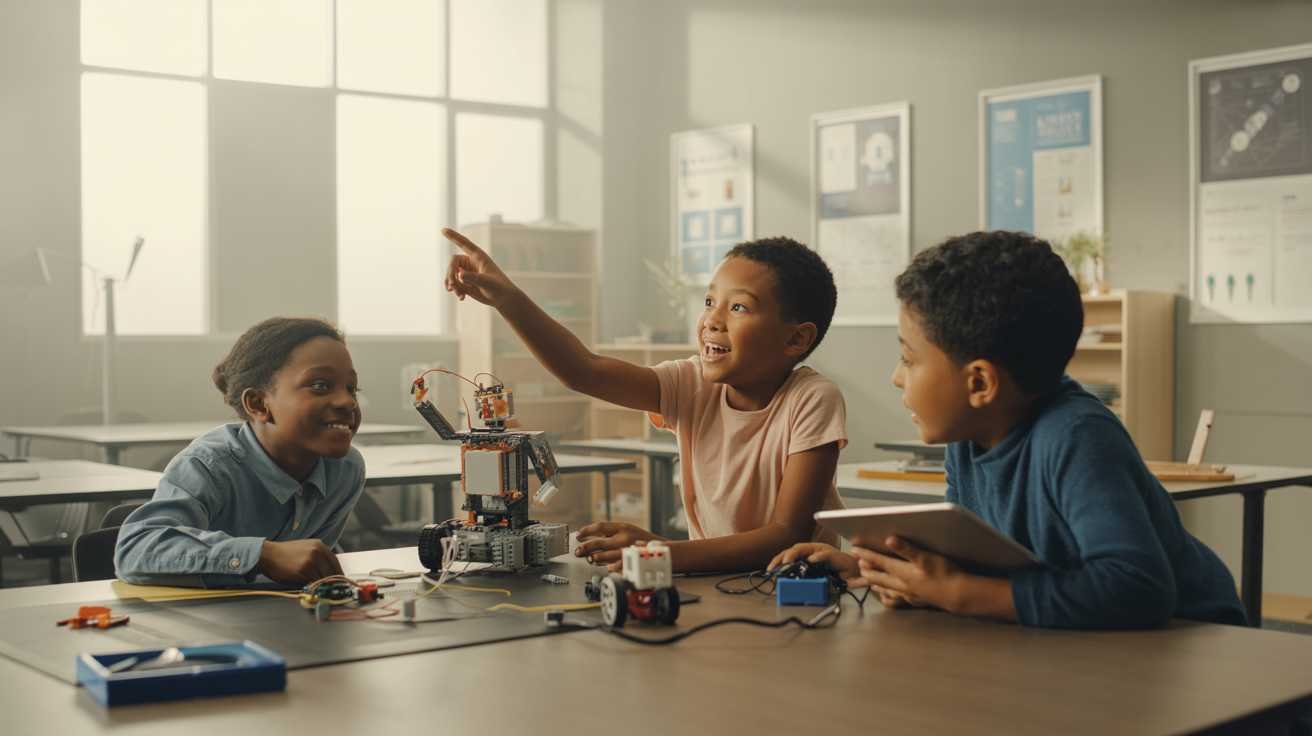
In today’s fast-paced, technology-driven world, engaging students in meaningful learning experiences has become more crucial than ever. One of the most effective ways to do this is through hands-on STEM (Science, Technology, Engineering, and Mathematics) project kits. These kits don’t just teach kids the fundamentals of science or engineering; they actively foster collaboration, communication, and peer learning, all of which are essential life skills in the modern world. The best part? They’re not just for students interested in traditional academic paths but also those exploring career opportunities such as a physical education job. Read on to discover how STEM kits make learning not only exciting but collaborative, and how they can set your students – or even yourself – on a path to success.
Why Collaboration is the Heart of STEM Project Kits
When we think of STEM, we often think of solitary scientists or engineers, heads down, immersed in their work. But in reality, innovation thrives through collaboration. STEM project kits are designed to break the barriers between solo learning and group problem-solving. These kits encourage students to work together, combining their unique skills, perspectives, and ideas. Whether it’s building a robot or conducting an experiment, the need for teamwork is built into every challenge.
For example, imagine a group of students tasked with building a working model of a sustainable city. Each student might be responsible for different aspects of the project – one could focus on the solar panel system, another on water conservation methods, and another on energy efficiency. Through collaboration, they not only solve individual problems but also learn how their components interact, honing their communication and teamwork skills. This kind of learning isn’t confined to the classroom; it’s transferable to real-world jobs, including those in physical education, where teamwork and communication are key to success. If you’re pursuing a physical education job, understanding how group dynamics work can make you a better team player and leader, whether you’re coaching or designing fitness programs.
The Role of Communication in STEM Learning
Communication is another pillar that STEM project kits build. Students must articulate their ideas clearly, explain their thinking, and listen to others. In many cases, they are also required to document their process and findings, whether in writing or through presentations. This requires a level of clear, concise communication that is invaluable, not just in the classroom but in professional environments too.
Let’s take a look at a scenario where communication is essential: during a group robotics challenge. Each student has a unique role – perhaps one is programming the robot, another is assembling the mechanical parts, and another is ensuring the sensors function correctly. In this case, students must communicate constantly, updating each other on their progress, discussing roadblocks, and troubleshooting in real time. Without strong communication, the robot won’t function, and the group’s efforts will collapse. This experience mirrors what you might face in a physical education job, where clear communication between coaches, athletes, and teammates is critical for successful teamwork and achieving collective goals. Effective communication allows physical education professionals to motivate, instruct, and support their teams toward success.
Peer Learning and Its Importance in STEM Kits
Peer learning is one of the most powerful educational strategies that STEM project kits offer. In traditional learning environments, students often work independently, and the teacher is the sole source of knowledge. However, STEM kits encourage a peer-to-peer dynamic where students can teach and learn from each other. This exchange of knowledge enhances learning outcomes because it forces students to think critically about how they explain concepts to their peers and helps them gain a deeper understanding themselves.
For instance, consider a group of students building a mechanical structure from a STEM kit. One student might struggle with the assembly instructions but may find that another student, who has grasped the concept more easily, can offer guidance. This peer-to-peer teaching not only boosts the confidence of the learner but also reinforces the knowledge of the teacher. Similarly, in a physical education job, the ability to learn from others, whether it’s fellow coaches or students, helps professionals refine their skills and adapt to different situations. Peer learning cultivates a supportive environment where everyone has something valuable to contribute.
Engagement Through Real-World Applications
STEM kits engage students not just through theoretical learning, but through practical, real-world applications. Whether it’s designing a bridge, creating a simple computer program, or constructing an energy-efficient home, STEM kits help students understand how the concepts they’re learning directly apply to the world around them. This hands-on approach makes learning more exciting, but it also teaches students how to apply their knowledge in practical scenarios.
Take, for example, a STEM kit that simulates the challenges of building a sustainable home. Students might face limitations like budget constraints or environmental factors, forcing them to prioritize certain aspects over others, much like professionals do in the real world. These types of activities foster critical thinking, creativity, and problem-solving skills, which are transferable not just to engineering or tech fields but also to other areas like physical education jobs. Whether you’re managing a fitness program, developing exercise regimens, or coordinating sports events, problem-solving and critical thinking are always in demand.
Building Confidence Through Hands-On Learning
Confidence is a natural byproduct of the learning process when students see the tangible results of their hard work. STEM kits allow students to experiment, fail, and ultimately succeed in creating something from scratch. This process of trial and error is not only educational but also empowering. As students navigate the challenges of assembling a project or troubleshooting a malfunctioning part, they learn resilience and perseverance, traits that are vital in both academic and professional settings.
In physical education, this concept is mirrored when athletes practice and refine their skills. Each failure on the court or field is an opportunity for growth, and each success builds confidence. For physical education professionals, fostering confidence in others is just as important. A successful coach, for instance, doesn’t just teach physical skills but also encourages mental resilience in their students, helping them overcome obstacles and grow stronger as individuals and as a team.
Fostering Creativity and Innovation
STEM kits often require students to think outside the box and come up with innovative solutions to problems. Unlike traditional textbook learning, where the answers are often clear-cut, STEM challenges encourage students to explore multiple approaches, test hypotheses, and tweak their designs. This freedom fosters creativity and innovation, qualities that are invaluable in any career, including physical education.
Consider a scenario where students are asked to design a fitness app prototype using a STEM kit. Instead of simply following a set of instructions, they must figure out how to make their app engaging, functional, and user-friendly. The creativity involved in brainstorming ideas, sketching designs, and iterating on their prototype mirrors the creative thinking required in physical education jobs when developing new programs or fitness routines. Innovating in the gym, classroom, or sports arena requires the same problem-solving mindset that STEM kits instill in young learners.
How STEM Project Kits Help Bridge the Skills Gap
As the demand for STEM professionals continues to rise, many students face a growing skills gap. STEM project kits provide a practical way to bridge this gap by teaching students foundational skills that are highly valued in today’s job market. These kits allow students to get hands-on experience with technology, engineering, and problem-solving, which gives them a competitive edge in their careers. Importantly, this extends to non-traditional career paths like physical education jobs, where knowledge of technology and data analytics can enhance fitness programs and sports management.
As a result, STEM kits serve as more than just an educational tool; they are a gateway to exciting career opportunities in fields that span far beyond traditional STEM careers. Whether you’re considering a physical education job or another career path, the practical skills gained from STEM projects will give you an advantage in an increasingly competitive job market. Employers are looking for individuals who can think critically, work collaboratively, and communicate effectively – traits that are cultivated through hands-on learning.
Conclusion: The Urgent Need to Get Involved with STEM Kits
As we’ve seen, STEM project kits are not just an educational tool but a transformative experience that fosters collaboration, communication, peer learning, and creativity. Whether you’re a teacher looking to enrich your students’ learning or someone exploring a career in physical education, these kits can open doors to endless possibilities. Don’t miss out on the opportunity to enhance your learning or your career prospects with these hands-on, engaging projects. The future is driven by innovation, and STEM kits offer the perfect platform to start your journey today.