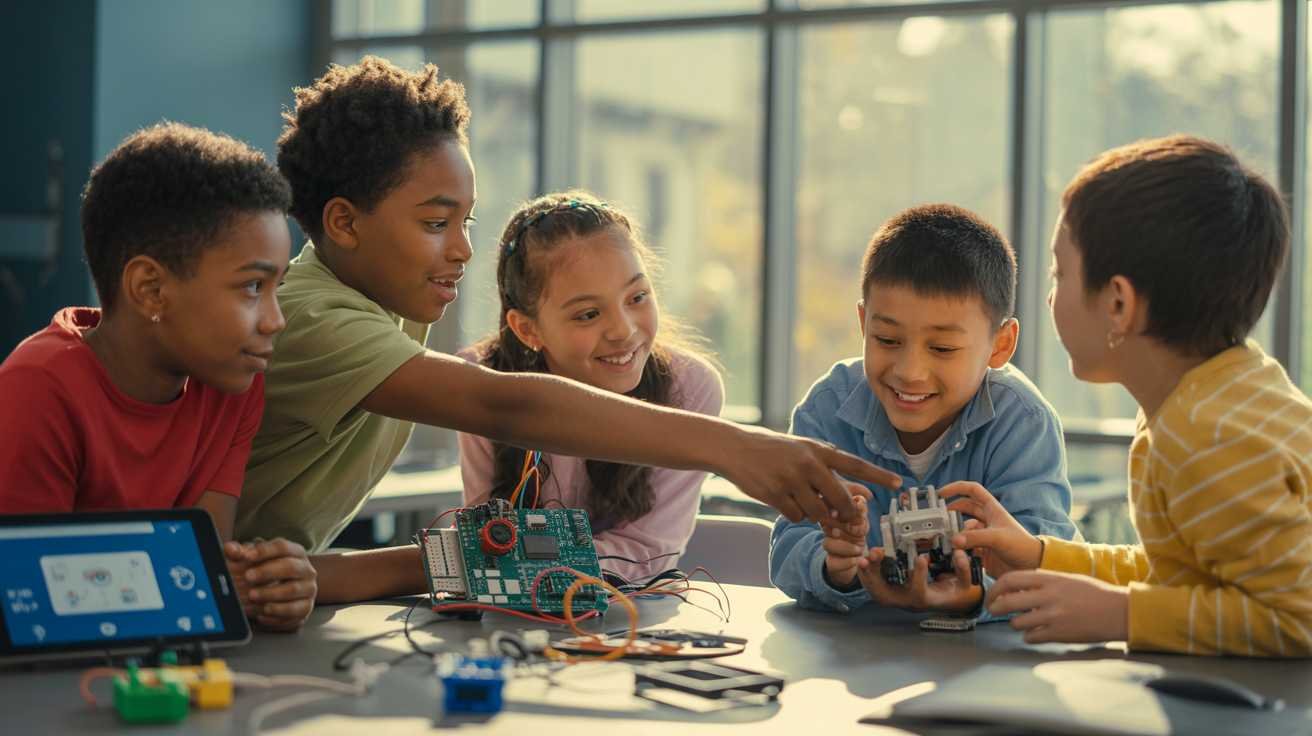
In today’s rapidly evolving educational landscape, hands-on learning experiences are no longer a luxury; they are a necessity. STEM project kits, which seamlessly integrate science, technology, engineering, and mathematics, provide an exciting avenue for students to learn, collaborate, and grow together. But more importantly, these kits do more than just teach – they promote collaboration, communication, and peer learning, laying a solid foundation for essential life skills. As education experts, including Ramon Rodriguez, continue to highlight, these kits are revolutionizing how students interact, think critically, and solve problems. If you’re not already embracing this trend, you’re missing out on a transformative educational experience that could set your students apart. Don’t let this opportunity slip away – act now before it’s too late!
The Power of Hands-On Learning
There’s a reason that hands-on learning is consistently recognized as one of the most effective teaching methods across the globe. It’s because it connects theory to practice, which not only makes learning more enjoyable but also more meaningful. With STEM project kits, students dive deep into real-world problems, applying what they’ve learned in the classroom to create tangible results. These kits foster curiosity, stimulate problem-solving abilities, and most importantly, promote collaboration among peers. Ramon Rodriguez education specialists assert that the ability to physically engage with the learning material boosts retention and understanding, creating an environment where learning becomes a collaborative adventure rather than a solitary task. Whether building a robot, solving engineering puzzles, or creating a sustainable energy solution, students learn by doing, and in the process, they learn how to communicate their ideas clearly and effectively to their peers.
Collaboration as a Key Component of STEM Education
Collaboration is a cornerstone of any successful STEM project. When students work together, they combine their unique strengths, perspectives, and skills, creating a powerful synergy that drives innovation and creativity. STEM project kits, by their very nature, are designed to be worked on in teams, making them the perfect tool for encouraging collaborative learning. Ramon Rodriguez education advocates for this type of teamwork because it helps students develop essential interpersonal skills, such as teamwork, negotiation, and empathy. In the process, students are exposed to different problem-solving strategies, making them more adaptable and resourceful in tackling challenges. For example, in a robotics project, one student may excel at programming, while another might have a knack for mechanical design. Working together, they not only build a robot but also learn how to communicate, delegate tasks, and combine their efforts to achieve a common goal.
Enhancing Communication Skills Through STEM Kits
Communication is another critical aspect of successful collaboration, and it’s a skill that STEM project kits can enhance in numerous ways. Students must be able to articulate their thoughts, ideas, and solutions clearly to their teammates, which builds their ability to explain complex concepts in a way that others can understand. Whether it’s presenting a design plan, explaining how a circuit works, or discussing the results of an experiment, students must communicate effectively to ensure the success of the project. This constant need for verbal interaction, coupled with the challenge of explaining abstract ideas, strengthens their communication skills and prepares them for future professional environments. As Ramon Rodriguez education insights suggest, when students learn to communicate their thought processes in a collaborative setting, they gain confidence and clarity, making them more persuasive, efficient, and confident in any team-oriented context.
Building Peer Learning Opportunities
Peer learning is an invaluable aspect of STEM education. As students work through challenges together, they are naturally inclined to teach one another, fostering an environment of mutual support. This peer-to-peer teaching process helps reinforce the material, as students often gain a deeper understanding of a topic when they explain it to someone else. Additionally, peer learning provides a sense of accountability. Students become more invested in their learning because they know their success is interconnected with the success of their teammates. This social dynamic is amplified by the collaborative nature of STEM project kits, which offer a hands-on approach to tackling complex problems that require input from all team members. Ramon Rodriguez education experts often emphasize that peer learning creates a learning cycle where students continually reinforce each other’s strengths and address weaknesses, building a truly inclusive educational atmosphere.
Fostering Critical Thinking and Problem Solving
Critical thinking and problem-solving skills are essential for success in any field, and STEM project kits provide the perfect environment for students to develop these competencies. Students are tasked with identifying problems, brainstorming solutions, and testing their ideas through trial and error. This iterative process encourages them to think critically, assess their decisions, and reflect on their methods. As they collaborate and communicate with their peers, they are exposed to a range of viewpoints and ideas, helping them approach problems from multiple angles. Ramon Rodriguez education experts point out that this process not only nurtures problem-solving skills but also builds resilience. Students learn that failure is a part of the learning process and that perseverance, combined with teamwork and effective communication, leads to success. These skills are not just valuable for academic achievement – they are vital for success in the workforce and beyond.
Creating Real-World Connections Through STEM Projects
One of the greatest benefits of STEM project kits is their ability to bridge the gap between classroom learning and real-world applications. When students engage with these kits, they are not just learning abstract concepts – they are solving problems that are directly relevant to the world around them. Whether it’s designing an eco-friendly building, creating a device to reduce waste, or developing a technological solution for a social issue, students see the impact of their work in a broader context. This connection to the real world makes learning more meaningful and motivates students to think critically about how they can contribute to society. Ramon Rodriguez education specialists advocate for STEM projects because they provide students with the tools to address real-world challenges, inspiring them to become the problem-solvers and innovators of tomorrow.
Preparing Students for the Future Workforce
The future workforce will be increasingly dominated by fields that require a deep understanding of science, technology, engineering, and mathematics. By engaging with STEM project kits, students are gaining skills that are in high demand in today’s job market. Employers are constantly seeking individuals who are not only technically proficient but also able to work well in teams, communicate effectively, and think critically. STEM project kits help students develop these skills by providing opportunities for collaboration, communication, and problem-solving in a practical setting. By preparing students for the future workforce, these kits give them a competitive edge in a rapidly changing world. As Ramon Rodriguez education experts argue, the skills learned through STEM kits will ensure that students are not only ready for the jobs of tomorrow but are also equipped to be leaders and innovators in their chosen fields.
The Urgency of Incorporating STEM Kits in Education Today
The time to act is now. The world is changing fast, and the educational landscape is evolving just as rapidly. If schools and educators don’t incorporate STEM project kits into their curricula, they risk falling behind. The future of education and the workforce depends on equipping students with the skills they need to thrive in a technology-driven world. The longer you wait to adopt these kits, the more your students will miss out on critical learning experiences that can transform their academic careers and prepare them for future success. Ramon Rodriguez education advocates have stressed the importance of early adoption, warning that schools that are slow to integrate these hands-on learning tools will be left behind as the global demand for STEM professionals continues to grow. Don’t let your students fall behind – embrace STEM project kits today and watch them flourish.