
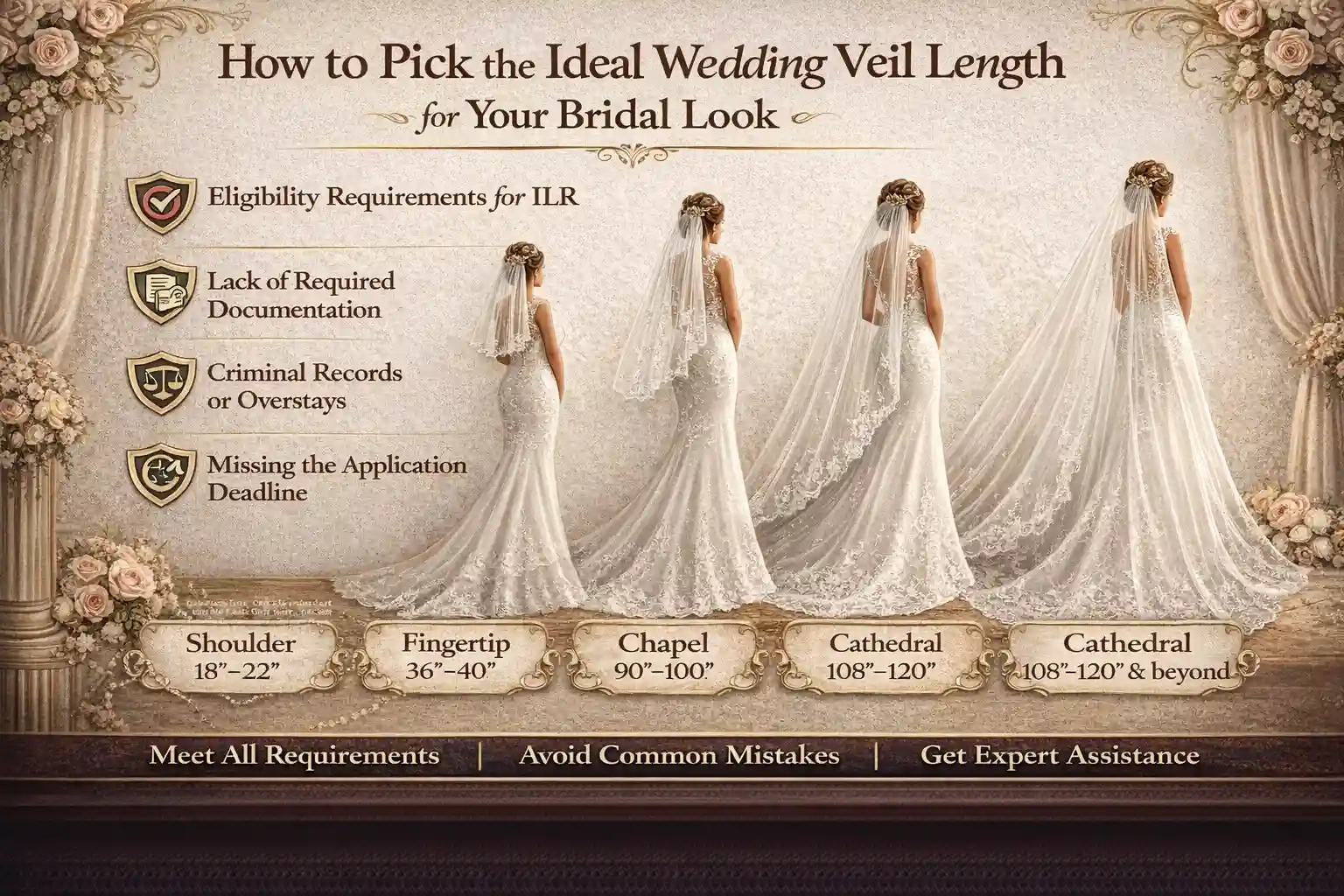
Choosing a wedding veil can feel just as personal as choosing the dress itself. The length you select shapes your outline, influences your movement, and sets the tone for the entire moment you walk down the aisle. Some brides want something soft and minimal, others want a long, drifting veil that feels like it was made for a grand entrance. Whatever your taste, understanding how each length works will help you choose a style that feels right for you and your day.
This article explores the key factors to think about, the character of each veil length, and how brides can link the veil with their dress, venue, and personal style.
Key Factors to Consider Before Choosing a Veil Length
Your Dress Silhouette and Details
Your dress is the starting point for selecting a veil. Each silhouette reacts differently to length.
- A-line dresses pair well with almost any veil, from shoulder-length to cathedral-length
- Mermaid and fit-and-flare gowns often look balanced with fingertip, ballet, and chapel-length veils because these lengths follow the natural shape without cutting the outline sharply.
- Ballgowns work beautifully with chapel and cathedral-length veils, as the flow of the tulle sits naturally over a fuller skirt.
- Sheath dresses tend to look elegant with fingertip or chapel-length veils that bring softness without overwhelming the clean form.
Dress detailing matters as well. If the bodice features beading, lace, or appliqué, shorter veils allow those elements to remain visible. Longer veils work well if the skirt has minimal detail or if you want a veil that trails behind without drawing attention away from your neckline.
Your Venue and Ceremony Setting
Your surroundings play a large role too. Indoor weddings can support dramatic veil lengths because there is less chance of snagging or dealing with wind. Grand venues such as ballrooms or churches look stunning with chapel and cathedral-length veils because the scale of the space suits a long, elegant train.
Outdoor ceremonies need a little more thought. A beach setting works well with shorter lengths such as shoulder, elbow, or fingertip because they allow easier movement. Garden or countryside weddings can still support longer lengths, though you may prefer a lighter tulle to move gracefully in the breeze.
Your Hairstyle and Accessories
Your chosen hairstyle influences how the veil sits.
- Updos hold longer veils securely due to their structure.
- Half-up styles work well with almost every length.
- Loose waves can carry fingertip or ballet veils beautifully, especially if the comb is placed slightly lower on the head for a soft fall.
If you are wearing a headpiece, crown, or tiara, the position determines how the veil drapes. Placing a veil behind the accessory gives a gentle shape, while placing it over a tiara gives a fuller, royal look.
Your Personal Style and Comfort
Some brides feel their best with a long, trailing veil that moves around them as they walk. Others prefer a lighter, shorter veil that adds just a touch of softness. Think about how you want to feel on the day. Do you want to glide down the aisle with a train that follows behind, or do you want freedom to move during photos and dancing? The answer often points you toward the right length.
Breakdown of Each Veil Length and Who It Suits
Shoulder-Length Veil
Shoulder-length veils are light, airy, and ideal for relaxed or modern bridal looks. They sit just above the shoulders and work well with dresses that have detailed bodices, illusion sleeves, or statement necklines. This length is also a good option for brides who want a veil for the ceremony but prefer something minimal.
Elbow-Length Veil
Elbow-length veils fall around the waistline and offer a balanced look for many silhouettes. They complement A-line and ballgown dresses because they sit neatly at the point where the skirt begins to flare. This length gives a soft finish without taking attention away from the dress. Brides who want a timeless look often choose this veil for its classic appeal.
Fingertip Veil
This length is one of the most popular choices for brides. It falls around the fingertips when standing straight and suits nearly every dress style. Fingertip veils add movement, frame the figure, and offer softness without taking up floor space. They work beautifully for indoor and outdoor weddings and look elegant in photographs.
Ballet or Waltz Veil
A ballet veil usually finishes between the knees and the ankles. This length offers the flow of a long veil without trailing on the ground. It is ideal for brides who want movement and softness while staying practical. Ballet veils also pair well with dresses that feature longer skirts or subtle trains.
Chapel-Length Veil
Chapel-length veils extend slightly beyond the gown’s train. They create a romantic look and are a favourite for formal weddings. Brides who want a graceful trailing effect without the full drama of a cathedral veil often choose this length. It works particularly well with dresses that already have some length to the skirt.
Cathedral-Length Veil
Cathedral-length veils bring a striking sense of theatre. They are perfect for formal venues, long aisles, and brides who want a moment of grandeur. Falling well beyond the dress train, they photograph beautifully and create a floating effect when lifted by a breeze. Brides who choose this length often want a once-in-a-lifetime silhouette that stands out from every angle.
Royal-Length Veil
Royal veils are the longest option, creating a dramatic statement for brides who want a full, majestic look. They suit grand venues, long aisles, and gowns with significant structure. These veils take careful handling and are often chosen for high-impact entrances or editorial-style photography.
How to Match Veil Length to Dress Shape
Pairing the veil with the dress shape creates harmony in the overall look and helps you discover the perfect wedding veil length for your gown.
- Mermaid and fit-and-flare gowns benefit from fingertip, ballet, or chapel veils because these lengths sit naturally over the outline.
- Sheath dresses look refined with fingertip or chapel-length veils that fall softly without adding bulk.
- Ballgowns look beautiful with chapel or cathedral veils that balance the wider skirt.
- Shorter dresses pair well with shoulder or elbow-length veils to keep the proportions aligned.
The aim is to create a smooth, graceful flow from the top of the head to the hem of the dress.
How Veil Length Affects Photos and Movement
Long veils create sweeping lines in photographs, especially during the walk down the aisle, entrances, and posed shots. Photographers often use the veil for movement-focused images. Shorter lengths are easier for candid photos because they require little adjustment.
If you want walking comfort, shorter veils allow easier movement and fewer adjustments during the day. Longer veils may require a bridesmaid to help with arranging the train, especially for outdoor shots or uneven ground.
Choosing the Right Fabric and Embellishments
Fabric influences how the length behaves.
- Soft tulle creates a light, airy fall suitable for fingertip and ballet lengths.
- Firmer tulle creates shape, especially for shoulder and elbow-length veils.
- Lace trims and embroidered edges add structure and weight, which helps longer veils fall neatly.
- Scalloped edges, pearls, and floral appliqué can elevate the softness of the veil without distracting from the dress.
Heavier embellishments work best on chapel or cathedral lengths because the additional weight helps anchor the fabric. Light, delicate designs suit shorter lengths that sit close to the body.
FAQs
Can I wear a long veil with a short wedding dress?
Yes, you can. A long veil can give contrast to a short dress and create a striking outline. Many brides choose a cathedral or chapel veil with a mini or tea-length dress for a modern, stylish look that still feels bridal.
Should my veil match the exact shade of my dress?
Matching is ideal, though it does not have to be exact. As long as the tones sit comfortably together, the full look remains balanced. Bridal whites vary, so comparing fabrics during your fitting is the easiest way to find a close match.
Can I switch veil lengths between the ceremony and reception?
Yes. Some brides choose a dramatic long veil for the aisle and swap to a shorter, lighter one for the reception. This allows easy movement during dancing and photos while keeping the ceremonial look intact.
Are veil lengths different for civil ceremonies?
Civil ceremonies tend to be more intimate, so many brides choose fingertip, elbow, or shoulder lengths. That said, a long veil still works beautifully if you want a striking entrance or a soft, floating finish to your outfit.
Do veil lengths suit all face shapes?
Most lengths work with any face shape because the veil sits behind the head rather than framing the face tightly. The style of the comb placement and the fullness of the tulle have more impact than length alone.


