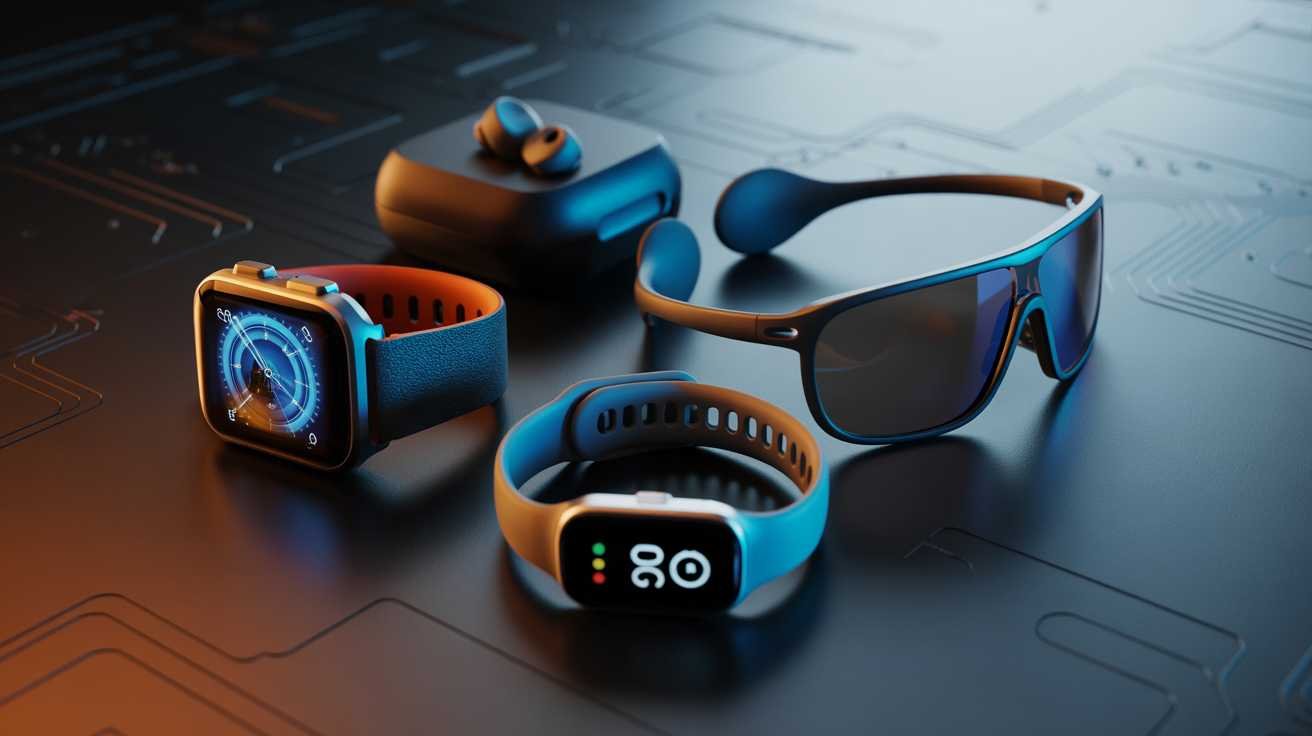
In 2025, wearable technology has transcended its roots as a mere convenience, evolving into an indispensable facet of daily life. From health monitoring to seamless connectivity, the latest wearables are not just gadgets – they’re lifelines, companions, and personal assistants all rolled into one. If you’re not already integrating these innovations into your routine, you’re not just missing out – you’re falling behind.
The Rise of Smart Glasses: Merging Fashion with Functionality
Imagine walking down the street, your favorite song playing softly in your ears, a message notification discreetly appearing in your line of sight, and turn-by-turn navigation guiding you to your destination – all without lifting a finger. This is the reality with the latest smart glasses. Brands like Ray-Ban Meta have redefined eyewear, embedding cameras, speakers, and processing hardware into stylish frames. These glasses offer features like live video calling, real-time translation, and even hands-free UPI payments, making them a game-changer in wearable tech. The integration of AI and gesture recognition further enhances user experience, allowing for intuitive control without the need for touchscreens or buttons. As these devices become more mainstream, they promise to revolutionize how we interact with the digital world.
AI-Powered Smartwatches: Your Personal Health Assistant
Gone are the days when smartwatches were merely extensions of your smartphone. The latest models, such as the Google Pixel Watch 4, have transformed into comprehensive health and fitness monitors. Equipped with advanced sensors, these watches track metrics like heart rate, skin temperature, and sleep patterns. The integration of AI allows for personalized health coaching, offering insights and recommendations tailored to your unique needs. With features like dual-frequency GPS, satellite SOS messaging, and rapid charging capabilities, these smartwatches are not just accessories – they’re essential tools for maintaining and improving your health. Whether you’re an athlete tracking performance or someone looking to monitor daily activity levels, these wearables provide the data and insights needed to make informed decisions about your well-being.
Smart Rings: Discreet Yet Powerful
For those seeking the benefits of wearable technology without the bulk of a smartwatch, smart rings offer a sleek alternative. Devices like the Oura Ring and the upcoming Samsung Galaxy Ring are designed to be worn continuously, collecting data on sleep, activity, and overall health without drawing attention. These rings utilize advanced sensors to monitor metrics like heart rate variability, body temperature, and respiratory rate, providing users with a comprehensive view of their health. Their discreet design makes them ideal for both everyday wear and specialized applications, such as fitness tracking and stress management. As technology continues to advance, smart rings are poised to become a staple in the wearable tech landscape, offering a blend of functionality and subtlety.
Smart Clothing: The Future of Fitness Monitoring
Imagine a workout where your clothes do more than just support your movements – they actively monitor and enhance your performance. Smart clothing, embedded with sensors and AI, is making this a reality. Garments like AI-driven smart sportswear utilize textile strain sensors to assess muscle activation, breathing patterns, and movement efficiency in real-time. This data is then analyzed to provide feedback on exercise execution, helping users optimize their workouts and reduce the risk of injury. As these technologies become more refined, smart clothing will play a pivotal role in personalized fitness regimens, offering insights that were once only available through specialized equipment or professional trainers.
Gesture-Controlled Wearables: The Hands-Free Revolution
In a world where multitasking is the norm, the ability to control devices without using your hands is a significant advantage. Gesture-controlled wearables, such as those utilizing the Helios 2.0 system, allow users to interact with their devices through simple hand movements. By recognizing microgestures like thumb swipes or finger pinches, these systems enable control of smart glasses, AR interfaces, and other connected devices without the need for physical contact. This hands-free interaction not only enhances convenience but also opens up new possibilities for accessibility, particularly for individuals with mobility impairments. As this technology matures, it promises to redefine how we interact with the digital world, making interfaces more intuitive and inclusive.
Non-Invasive Health Monitoring: A Glimpse into the Future
The future of healthcare is moving towards non-invasive monitoring, and wearables are at the forefront of this shift. Innovations like the Pulse-Fi system utilize Wi-Fi signals and AI to monitor heart rate without the need for physical contact. Similarly, advancements in sweat glucose detection are enabling continuous monitoring of blood sugar levels without the discomfort of traditional methods. These technologies not only improve user comfort but also provide real-time data that can lead to more proactive and personalized healthcare. As these non-invasive solutions become more prevalent, they have the potential to revolutionize chronic disease management, offering patients and healthcare providers new tools for monitoring and intervention.
Integration with Recreation Education: Enhancing Learning Through Technology
The intersection of wearable technology and recreation education is creating new opportunities for interactive and immersive learning experiences. Wearables equipped with sensors and AI can track physical activity, monitor health metrics, and provide real-time feedback, enhancing the learning process in recreational settings. For instance, in outdoor education programs, wearables can monitor participants’ physical exertion levels, ensuring safety while also providing data to improve performance. Similarly, in aquatic recreation education, devices can track swimming techniques and offer insights for improvement. By integrating wearable technology into recreation education, educators can provide more personalized and effective learning experiences, fostering a deeper connection between participants and the activities they engage in.
The Urgency of Adoption: Why You Can’t Afford to Wait
The wearable tech revolution is not a distant future – it’s happening now. Early adopters are already reaping the benefits of these innovations, from enhanced health monitoring to seamless connectivity. Delaying your entry into this space means missing out on opportunities to improve your health, streamline your daily routines, and stay ahead of technological trends. As these devices become more integrated into various aspects of life, from healthcare to education, not embracing them could mean falling behind. The question isn’t whether you can afford to invest in wearable technology – it’s whether you can afford not to. Don’t let the future pass you by; embrace the wearable tech revolution today.
If you want to stay updated on the latest tech trends, check out our physical education review of newly released smart home devices this week.