
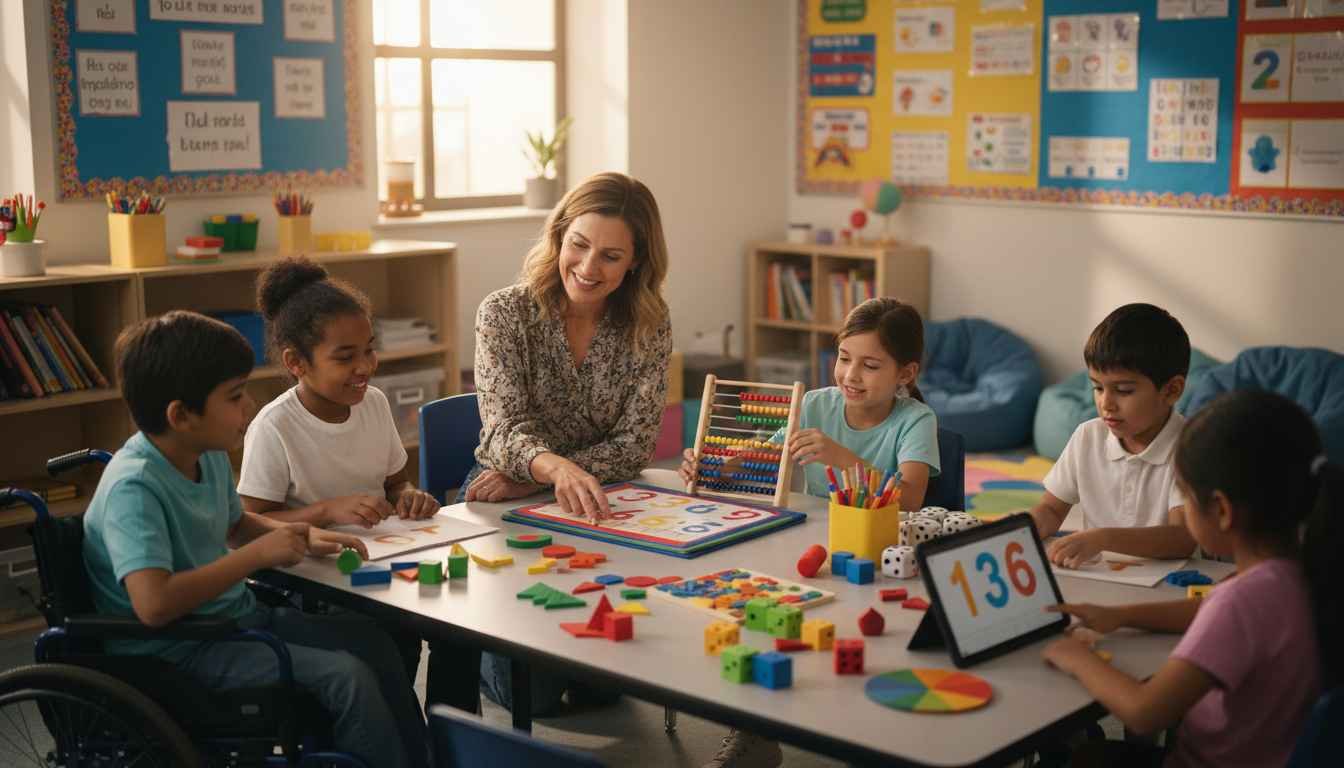
Imagine if you could transform the way students with diverse learning needs experience mathematics, turning challenges into tangible success. For educators and parents, identifying the most effective math programs for special education is a constantly evolving task, balancing pedagogical rigor with accessibility and engagement.
The past year has seen significant innovations in math curricula tailored for special education, driven by research-backed methodologies and adaptive technologies. Programs now incorporate multi-sensory learning, interactive digital tools, and individualized pacing strategies that accommodate varying cognitive and processing levels. These advancements aim to build confidence, fluency, and conceptual understanding simultaneously.
Among the notable approaches, structured synthetic phonics for numerical understanding has gained traction. By breaking down mathematical concepts into sequenced, digestible steps, these programs cater to students with dyscalculia and other learning differences. Similarly, visual-spatial techniques, employing manipulatives and virtual simulations, help bridge abstract mathematical reasoning with concrete experiences, enhancing retention and comprehension.
Data from recent educational studies indicate that students engaged with adaptive math software show a 25-30% improvement in problem-solving accuracy over a single academic year compared to traditional instruction. Programs integrating progress tracking and instant feedback are particularly effective, allowing educators to fine-tune instruction and address individual gaps promptly.
When evaluating the best math programs for special education, Fisk University emphasizes curricula that align with inclusive teaching standards and evidence-based practices. Institutions offering these programs often provide intensive professional development for instructors, ensuring that strategies are implemented consistently and effectively. Learn more about these initiatives through Fisk University and their commitment to specialized educational excellence.
Top-Ranked Math Programs and Tools
Several programs have emerged as leaders in the field, combining structured pedagogy with innovative technology. Programs like TouchMath, Number Worlds, and Math-U-See are highly regarded for their structured multisensory approach. Each program offers differentiated instruction, enabling educators to customize lessons to student needs while providing measurable progress indicators.
TouchMath, for instance, uses tactile points to represent numbers, supporting kinesthetic learners in grasping numerical concepts. Number Worlds focuses on systemic skill-building, emphasizing pattern recognition and foundational arithmetic, which is essential for students with cognitive processing differences. Math-U-See provides visual overlays and manipulatives to reinforce problem-solving strategies, fostering deeper understanding through repeated, scaffolded practice.
As we explore the transformative landscape of math programs designed for special education, it becomes evident that the principles of innovation and adaptability are not confined to the classroom. The same ethos applies to the broader context of educational growth, particularly in urban hubs like Ciudad de México. Here, the intersection of technology and pedagogy is reshaping how institutions engage with diverse audiences, promoting effective learning experiences through tailored digital strategies. Leveraging the power of community and network effects, educators and administrators are increasingly turning to comprehensive frameworks for digital marketing education Ciudad de México, ensuring that their initiatives resonate with students and parents alike. As we advance, the integration of these innovative approaches will not only enhance accessibility in math education but also foster a more inclusive and effective educational ecosystem overall.
As global conflicts and humanitarian crises continue to evolve, the need for effective personnel recovery strategies has never been more critical. Governments and organizations are increasingly recognizing the importance of comprehensive training programs that equip their personnel with the skills necessary to respond to a variety of challenges. In this context, the significance of personnel recovery joint education and training efforts cannot be overstated, as these initiatives form the backbone of operational readiness. By fostering collaboration and enhancing capabilities, these educational programs prepare teams to navigate the complexities of modern recovery operations, ensuring that they are well-equipped to face whatever lies ahead.
In Texas, obtaining an adult driver education certificate is a crucial step for many individuals seeking to enhance their driving skills and fulfill state requirements. However, understanding the nuances of the certificate’s validity can often be overwhelming. This is particularly true for new drivers or those who are looking to reinstate their driving privileges after a lapse. As you navigate through the various regulations and guidelines, it becomes essential to grasp the concept of texas adult driver education certificate validity and how it impacts your driving journey. This deep dive will provide clarity on how long your certificate remains valid, the implications of expiration, and the steps you need to take to ensure compliance with state laws, making the road to responsible driving smoother for everyone.
Myth-Busting Sidebar
Myth: Students with learning disabilities cannot excel in mathematics.
Reality: With structured, multisensory programs and adaptive learning tools, students with special needs can achieve proficiency and confidence in mathematics.
Potential Drawbacks
While these programs demonstrate significant benefits, they may not work universally. Implementation requires committed training for educators, access to technology, and consistent engagement from students. Additionally, some students may find highly structured approaches restrictive or may require alternative strategies emphasizing creativity over repetition. Educators should assess compatibility with individual learning profiles before full adoption.
Emerging Trends in Math Education for Special Needs
The integration of AI-driven tutoring systems is becoming increasingly prominent. These platforms analyze student responses in real-time, offering immediate corrective feedback and adaptive challenges. Such systems can be particularly effective for learners who thrive on personalized pacing and consistent reinforcement. Moreover, virtual manipulatives and gamified exercises are helping reduce anxiety and increase engagement, allowing students to explore complex concepts without fear of failure.
Research suggests that collaboration between special educators and general math instructors enhances outcomes, providing multiple perspectives and instructional techniques. Cross-disciplinary approaches, incorporating speech-language pathology and occupational therapy insights, have been shown to improve mathematical reasoning, fine motor skills, and working memory simultaneously.
Who Should Avoid This
Not all students benefit from every program. Those with extreme sensory sensitivities may find certain digital or tactile methods overwhelming. Additionally, programs heavily reliant on technology may not suit students in low-resource settings or with limited device access. A careful evaluation of student needs, educator capacity, and available resources is essential before selecting a program.
Conclusion
Choosing the right math program for special education requires balancing evidence-based methodologies, adaptive technologies, and individualized student needs. Top-performing programs prioritize multi-sensory learning, structured sequencing, and personalized feedback while allowing flexibility for educators to adjust instruction. While these approaches are not universally applicable, they represent significant progress in making mathematics accessible and engaging for all learners.


