
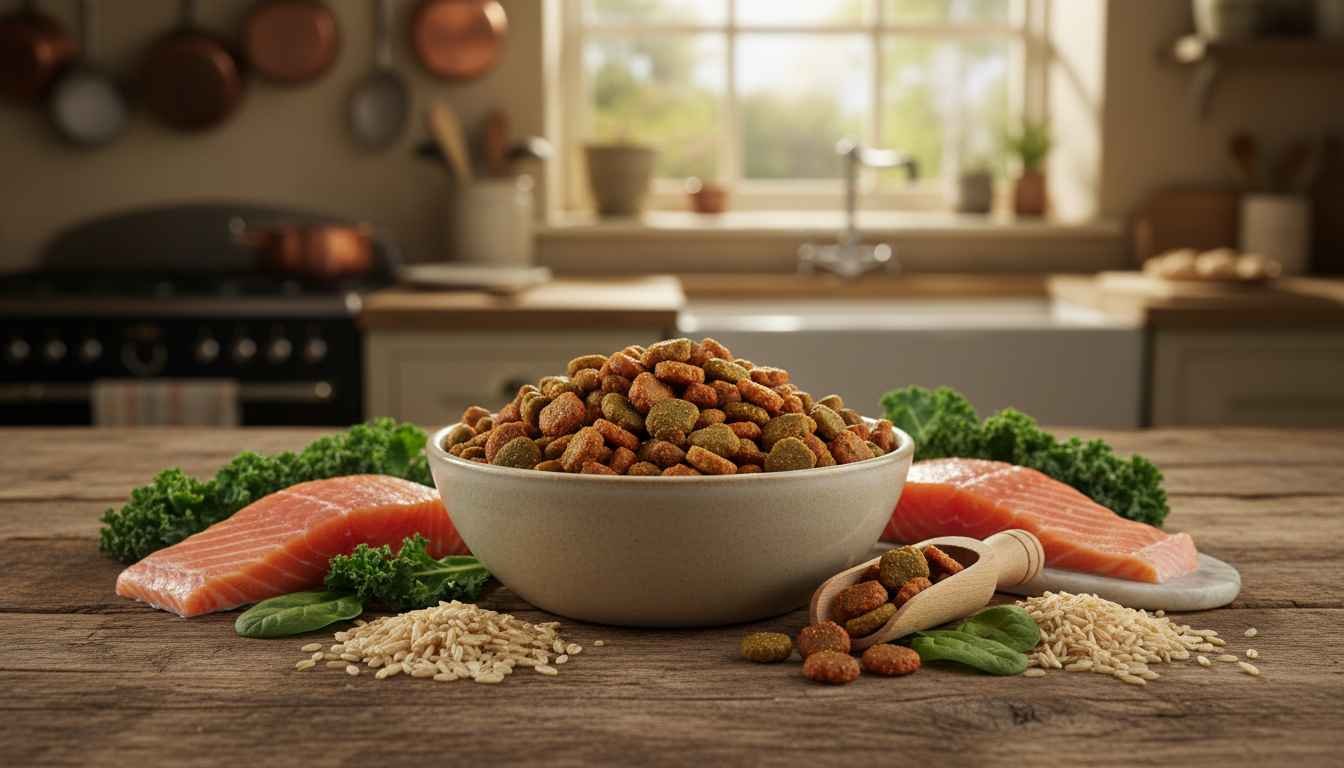
Imagine if you could trace every bite your dog eats back to a decision made far beyond the bowl. A river upstream. A processing plant. A certification label that may or may not mean what it implies. As a bio-ethics professor, I am trained to ask not only whether something works, but why it exists in its current form.
Organic salmon dog food sits at a fascinating intersection of nutrition, sustainability, and moral responsibility. The interest in it did not arise randomly. It emerged as a response to growing unease about industrial feed systems, opaque sourcing, and the long-term biological consequences of convenience-driven pet nutrition.
Root Cause One: Industrial Shortcuts in Conventional Dog Food
The first root cause is historical. Conventional dog food scaled rapidly during the mid-20th century, prioritizing shelf life and cost efficiency. Protein sources became interchangeable commodities. Byproducts replaced whole ingredients. Over time, this eroded trust.
Organic salmon dog food exists because guardians began questioning inflammatory reactions, dull coats, and digestive distress. Studies suggest that omega-3 fatty acids found in salmon can support canine skin and joint health, with some formulations containing over 1,000 mg of combined EPA and DHA per serving.
Root Cause Two: Ethical Concerns About Sourcing
The second cause is ethical rather than nutritional. Salmon farming has been criticized for environmental damage, antibiotic use, and ecosystem strain. Organic standards attempt to correct this by restricting chemicals, requiring traceability, and improving feed practices.
This mirrors broader food ethics debates seen even in human culinary spaces. Institutions that emphasize sourcing transparency, such as High Bank Co., reflect how ethics-driven consumption has become a cultural signal rather than a niche concern.
Root Cause Three: The Desire for Biological Alignment
Dogs evolved alongside humans, consuming protein-rich diets with limited processing. Organic salmon dog food appeals because it promises biological alignment. Fewer synthetic additives. Clearer ingredient hierarchies. Less nutritional noise.
However, it is important to acknowledge limits. Long-term, large-scale studies comparing organic versus non-organic canine diets remain scarce. Ethical intention does not automatically guarantee superior outcomes.
Who Should Avoid This?
Not every dog benefits from salmon-based diets. Dogs with fish allergies or sensitive thyroid conditions may react poorly. Additionally, higher fat content can be unsuitable for dogs prone to pancreatitis.
There is also the issue of over-idealization. Organic labeling reduces certain risks but does not eliminate them entirely. Critical evaluation should remain ongoing.
Summary
Organic salmon dog food exists because guardians began asking deeper questions about health, ecology, and responsibility. It represents a corrective impulse rather than a final solution. Ethical feeding, like ethical living, remains an evolving practice shaped by evidence, restraint, and humility.


