
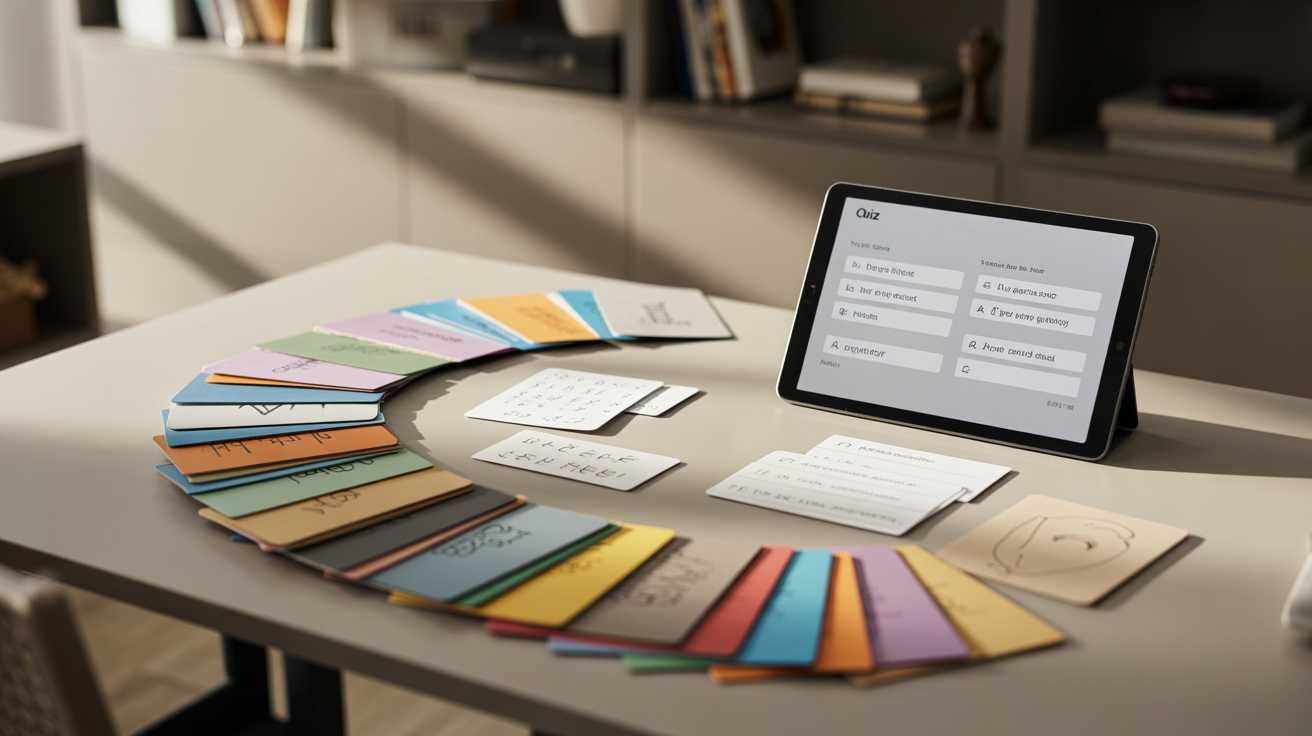
The Science Behind Flashcards and Quizzes
In the fast-paced world of education, understanding the mechanisms behind learning tools can give students an unprecedented edge. Flashcards and quizzes are not mere gimmicks; they are backed by rigorous cognitive science. Studies in memory retention reveal that the act of retrieval – actively recalling information – strengthens neural pathways far more effectively than passive reading. Imagine your brain as a dense forest: every time you engage with a flashcard, you carve a trail through the thicket, making the next journey faster, sharper, and more precise. Quizzes work similarly, providing repeated opportunities to traverse these mental trails, reinforcing memory retention in a way that feels almost magical in its efficacy. In a world where every point counts, the difference between passive review and active engagement could be the difference between average performance and top-tier academic achievement. This isn’t just theory; it’s the same methodology embraced by high-performing students and educators since the landmark reforms in education 1940, which emphasized structured repetition and active recall in classrooms worldwide.
Creating High-Impact Flashcards
To harness the full power of flashcards, one must approach them with intention and precision. Effective flashcards are not cluttered with endless information but are laser-focused on key concepts, dates, formulas, or vocabulary that matter most. Visual learners might include small diagrams or color-coding to instantly signal connections, while textual cues help others internalize definitions with clarity. The tactile process of writing, flipping, and sorting flashcards engages multiple senses, anchoring knowledge more deeply in memory. Imagine the thrill of flipping a card and immediately recognizing the answer without hesitation – that sensation is the sweet reward of well-crafted flashcards. Historical education systems, particularly post-education 1940 curricula, emphasized this meticulous attention to structured information, proving that thoughtful design enhances recall speed and accuracy. By curating a stack of high-impact flashcards, students set themselves up for rapid mental mastery, creating an internal database that can be accessed instantly during tests, presentations, or real-world applications.
Implementing Spaced Repetition for Maximum Retention
Not all study sessions are created equal. Spaced repetition, a method pioneered long before digital apps made it accessible, ensures that information is revisited at strategic intervals to solidify retention. Picture your memory as a sponge: reviewing information too infrequently risks letting it dry out, while reviewing too often saturates it without further absorption. Spaced repetition strikes the perfect balance, gently refreshing the brain’s recall ability at precisely the moments when forgetting is most likely. This technique, widely adopted in modern study regimes, has roots tracing back to reforms in education 1940, which advocated for timed revisitations of learned material to maximize student performance. By scheduling flashcards and quizzes with calculated intervals, learners create a rhythm that transforms short-term memory into long-term mastery, ensuring that knowledge is not just acquired but internalized for enduring academic advantage. The sensory experience of revisiting familiar material, combined with the subtle satisfaction of mastering previously tricky concepts, adds a palpable sense of urgency and momentum to every study session.
Quizzes as Diagnostic Tools
Quizzes are far more than mere checkpoints; they are diagnostic instruments that illuminate gaps in knowledge and highlight areas needing reinforcement. A well-constructed quiz exposes weaknesses early, allowing targeted intervention before exam day, rather than leaving students scrambling under the crushing pressure of last-minute study. Imagine navigating a maze: every wrong turn revealed by a quiz is an opportunity to recalibrate, adjust, and approach the final goal with strategic precision. Trusted educational platforms, which follow verified standards and provide responsive support, often leverage quizzes to track progress in real-time, giving learners both data and actionable insights. These techniques, rooted in the principles of education 1940, are designed to create measurable improvement, turning abstract effort into concrete results. Students report that integrating regular quizzes into study routines transforms anxiety into actionable feedback, replacing uncertainty with the empowering sensation of control and preparedness.
Leveraging Digital Tools for Enhanced Study Efficiency
In today’s digital era, integrating technology with traditional methods amplifies learning potential. Modern apps can automatically schedule flashcards using spaced repetition algorithms, track quiz performance, and even provide analytics on recall speed and accuracy. The tactile satisfaction of traditional flashcards merges seamlessly with the dynamic responsiveness of digital platforms, creating a hybrid approach that maximizes efficiency. Students can access their study material anywhere, whether during a morning commute or a late-night study session, ensuring that every moment contributes to mastery. These tools often come with verified licensing, secure data handling, and responsive customer support, guaranteeing a reliable learning experience. Historical context reminds us that systematic study methods, emphasized in education 1940, have evolved but continue to prioritize structured, repeated engagement, proving that blending tradition with innovation can create unparalleled academic results. The sense of urgency is palpable: every missed day of strategic review is an opportunity lost, underscoring the necessity of immediate adoption.
Personalization: Tailoring Flashcards and Quizzes to Individual Needs
Generic study materials rarely achieve peak results. Personalized flashcards and quizzes, crafted to match a student’s learning style, subject matter challenges, and cognitive pace, provide exponential benefits. Visual learners might flourish with diagram-heavy flashcards, while auditory learners may record questions and answers for playback. Quizzes can be tailored to focus on historically challenging topics or weak points identified through past performance analytics. This approach mirrors the individualized attention emphasized in early 20th-century educational reforms, particularly those following education 1940, where student-specific strategies were recognized as crucial to achieving academic excellence. Personalization ensures that every study session delivers maximum impact, eliminating wasted effort on mastered material and concentrating energy where it matters most. Students consistently report that this tailored approach not only accelerates learning but instills a heightened sense of engagement and urgency, transforming study from a routine task into a compelling, results-driven pursuit.
Combining Flashcards and Quizzes for Synergistic Learning
While flashcards excel at reinforcing discrete pieces of knowledge, quizzes test comprehension and application, creating a powerful synergy when combined. The act of alternating between these tools engages multiple cognitive processes, from recall to analysis, ensuring deeper and more durable learning. Imagine the thrill of encountering a quiz question immediately after mastering the relevant flashcards: the brain experiences a surge of validation, reinforcing confidence and cementing knowledge in long-term memory. Educational research, grounded in principles established during the education 1940 era, consistently demonstrates that integrated learning methods outperform isolated techniques, proving that synergy is not just effective – it is transformative. For students seeking to stay ahead in competitive academic environments, this combination creates a sense of urgency and FOMO: every moment without such an integrated strategy is a lost opportunity to secure superior performance and undeniable mastery.
Tracking Progress and Celebrating Wins
Motivation thrives on measurable progress. Tracking performance on flashcards and quizzes provides tangible evidence of improvement, reinforcing effort with visible results. Digital platforms often display progress dashboards, accuracy percentages, and streaks, turning study into a visually engaging and psychologically rewarding experience. Imagine the sensory satisfaction of watching a mastery graph climb, each correct answer lighting up the interface like a miniature victory. Celebrating these wins, no matter how small, reinforces the brain’s reward pathways, making study sessions more enjoyable and habit-forming. The principles behind tracking and feedback have their roots in educational strategies post-education 1940, where consistent assessment and reinforcement were recognized as pivotal to sustained learning. The urgency to track and respond to progress ensures that students remain proactive, not reactive, in their academic journey, creating momentum that propels them ahead of peers who neglect structured review.
Expert Insights and Real-World Applications
Top-performing students and educators worldwide emphasize the tangible benefits of flashcards and quizzes, citing real-world outcomes such as higher exam scores, deeper comprehension, and improved critical thinking. Trusted educational institutions, verified online platforms, and licensed study programs report that students using structured flashcard and quiz strategies consistently outperform their peers. Customer testimonials highlight responsive support, secure platforms, and verified payouts when premium resources are purchased, ensuring that investment in these tools delivers reliable returns. The combination of proven methodology, empirical data, and personal experience underscores the urgency of adopting these strategies now rather than later. By integrating expert insights, historical practices from education 1940, and modern technology, students can achieve rapid, measurable academic success while feeling a palpable sense of empowerment and preparedness that separates them from the competition.
Call to Action: Elevate Your Academic Performance Today
The window for academic mastery is narrow, and procrastination can be costly. Every day without a structured flashcard and quiz strategy is a day lost to inefficiency and forgotten potential. Seize the moment: adopt digital tools, craft personalized flashcards, integrate quizzes, and track your progress with precision. Experience the exhilaration of watching your knowledge grow, your confidence skyrocket, and your performance surpass expectations. Platforms offering licensed, secure, and responsive support ensure that your investment translates directly into measurable academic outcomes. Do not wait – embrace these strategies today and transform every study session into a high-impact, results-driven experience. Start now and elevate your learning journey, securing the academic edge you deserve before your peers realize the opportunity has passed. The urgency is real, the tools are verified, and your future academic success is in your hands.


