
Understanding the Spectrum of Learning Abilities
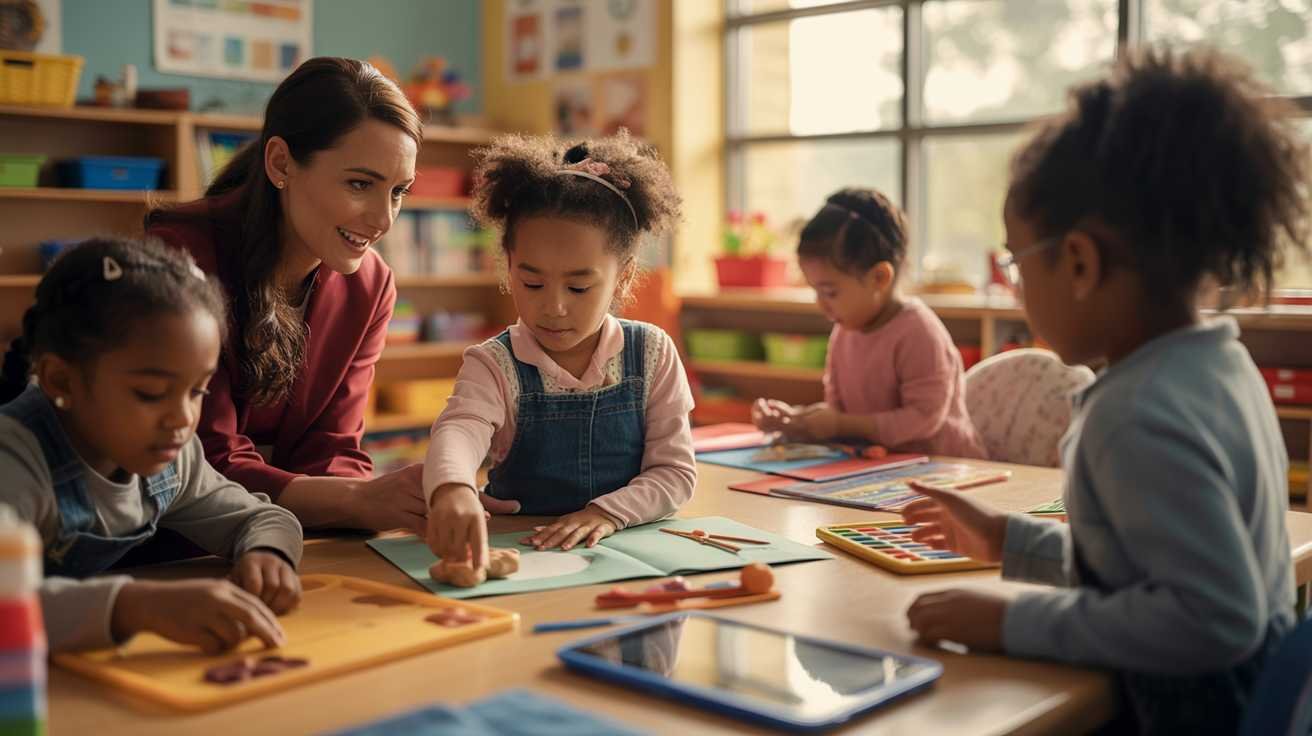
In today’s rapidly evolving educational landscape, classrooms are filled with students whose learning abilities vary dramatically. Some grasp concepts instantly, while others require repeated reinforcement and multi-sensory approaches. Understanding this spectrum is not just a pedagogical necessity – it is an urgent call to action for every educator who refuses to leave any student behind. The moment a student struggles silently, an opportunity for growth and mastery is lost. As an education saint, it becomes our moral and professional duty to observe, assess, and adapt our teaching strategies with precision. Research from the National Center for Learning Disabilities highlights that early identification and tailored support can improve long-term academic outcomes by over 30%, yet many classrooms fail to implement these strategies effectively. By cultivating an acute awareness of learning differences, educators can proactively design lessons that resonate with each student’s unique cognitive style, emotional readiness, and personal interests. Visual learners thrive with diagrams and color-coded notes, auditory learners excel through discussion and storytelling, and kinesthetic learners engage through movement-based exercises. This understanding forms the bedrock of effective, inclusive education that transforms struggling students into confident, capable learners, and sparks a contagious momentum of success across the classroom.
Implementing Differentiated Instruction
Differentiated instruction is no longer a luxury; it is an urgent requirement for classrooms brimming with diverse learners. This approach demands that teachers design multiple pathways for understanding the same concept, allowing each student to engage with material in ways that match their cognitive profile. Imagine a science lesson where some students are building intricate models of cell structures, others are analyzing interactive digital simulations, and a few are reading detailed narratives about cellular processes – each method targets different strengths yet achieves the same learning objective. According to Edutopia, classrooms implementing differentiation see higher engagement levels and improved retention rates. An education saint recognizes that differentiation extends beyond lesson planning; it requires ongoing formative assessments, reflective practices, and real-time adjustments. Teachers must cultivate a dynamic environment where visual, auditory, and tactile learners coexist and thrive simultaneously. The urgency here is palpable: failure to differentiate risks alienating students, diminishing their self-esteem, and eroding the overall classroom culture. By embracing differentiated instruction, educators unlock the latent potential in each student, ensuring no learner is left behind and creating a tangible ripple effect of achievement, confidence, and lifelong curiosity.
Utilizing Assistive Technology
Assistive technology represents a frontier in modern education that cannot be ignored. Tools like text-to-speech software, interactive whiteboards, adaptive learning platforms, and AI-driven tutoring systems transform abstract learning challenges into tangible opportunities for mastery. For a student struggling with reading comprehension, hearing text aloud while following along visually can bridge gaps in understanding almost instantaneously. A 2022 report from the International Society for Technology in Education indicates that classrooms leveraging assistive technology see an average improvement of 25% in student engagement and performance. Embracing these tools positions educators as true education saints, equipped to empower every learner. Beyond the technical advantages, assistive technology fosters inclusivity, builds student autonomy, and reduces stigma by normalizing different learning pathways. However, implementation must be precise, monitored, and responsive: devices should be paired with strategic lesson planning, feedback mechanisms, and professional development. The stakes are high, and the opportunity is fleeting. Educators who delay integrating these tools risk leaving students behind in a world increasingly driven by digital literacy and technological fluency. Acting decisively now ensures that every learner experiences success, confidence, and the thrill of discovery.
Fostering Social-Emotional Learning
Learning is not purely cognitive; it is deeply intertwined with social-emotional development. Students with varied abilities often face frustration, anxiety, or self-doubt, which can derail academic progress if left unaddressed. Cultivating a classroom environment that nurtures emotional intelligence is essential for immediate and long-term success. Practices such as reflective journaling, peer mentoring, and guided mindfulness exercises create a sanctuary where learners feel safe to experiment, fail, and grow. Data from CASEL (Collaborative for Academic, Social, and Emotional Learning) reveals that integrating social-emotional learning into academic instruction can increase student performance by up to 11 percentile points. The role of an education saint extends beyond lesson delivery: it involves recognizing emotional cues, intervening with empathy, and scaffolding resilience. Picture a student who struggles with math anxiety; by pairing structured problem-solving exercises with positive reinforcement, encouragement, and peer collaboration, teachers can transform dread into determination. Immediate intervention is critical, as emotional disengagement can spiral into long-term academic setbacks. Prioritizing social-emotional learning ensures students not only achieve academically but also develop the confidence and self-awareness needed to thrive in every aspect of life.
Adapting Assessment Strategies
Traditional assessments often fail to capture the depth of understanding in students with varied abilities, creating an urgent need to rethink evaluation methods. Performance-based assessments, portfolios, and project-driven evaluations allow students to demonstrate mastery in authentic, meaningful ways. Consider a student who excels in visual reasoning but struggles with written expression: asking them to create a detailed infographic instead of a standard essay provides a valid measure of comprehension while respecting their strengths. According to the Association for Supervision and Curriculum Development, alternative assessments can increase student motivation and achievement by offering immediate feedback and fostering ownership of learning. The education saint approach involves constant vigilance, flexibility, and creativity in assessment design. Real-time formative assessments, digital quizzes, collaborative projects, and reflective self-assessments provide a comprehensive view of student growth, highlighting strengths that conventional tests overlook. Urgency lies in ensuring that students are recognized for their abilities rather than penalized for differences. By adapting assessments, educators validate diverse talents, maintain high expectations, and inspire a continuous pursuit of knowledge and personal growth.
Incorporating Multisensory Learning
Multisensory learning engages multiple senses simultaneously to deepen understanding, enhance memory, and increase retention. Students with varied abilities often benefit from lessons that incorporate visual, auditory, tactile, and kinesthetic elements, transforming abstract concepts into tangible experiences. Imagine a geography lesson where students feel the texture of topographic models, listen to ambient environmental sounds, and trace river paths on interactive maps; the result is immersive learning that sticks. Research from the Journal of Learning Disabilities demonstrates that multisensory instruction significantly improves comprehension and recall for students with learning difficulties. As an education saint, leveraging multisensory methods is not optional – it is essential for equitable, impactful teaching. Teachers can integrate hands-on experiments, digital simulations, movement-based activities, and collaborative storytelling to reinforce learning objectives. The urgency is immediate: classrooms that neglect multisensory strategies risk disengaging learners and missing critical developmental windows. By creating rich, sensory-stimulating environments, educators ignite curiosity, enhance focus, and deliver knowledge in ways that resonate with the whole child, ensuring learning is both profound and enduring.
Creating Personalized Learning Plans
Personalized learning plans are the pinnacle of responsive education, designed to meet students where they are and propel them forward. These plans incorporate diagnostic assessments, learning style evaluations, and individual goals to craft a roadmap for academic and personal growth. Consider a student with exceptional creativity but challenges in analytical reasoning: a personalized plan might balance project-based assignments with targeted skill-building exercises, ensuring both strengths and weaknesses are addressed. The evidence is compelling: the Institute of Education Sciences reports that personalized learning can lead to a 16% increase in student achievement over traditional instruction. An education saint embraces personalization not merely as a technique but as a philosophy, committing time, resources, and emotional investment to each learner. Immediate action is critical, as delays in personalization can result in disengagement, frustration, and missed potential. By implementing individualized plans, teachers foster ownership, motivation, and measurable progress, creating a transformative learning journey that empowers students and inspires enduring confidence.
Engaging Families and Communities
Effective support for students with varied abilities extends beyond the classroom walls, requiring active engagement with families and the broader community. Parents, caregivers, and community mentors are invaluable partners in reinforcing learning strategies, modeling positive behaviors, and providing real-world contexts for knowledge application. Schools that cultivate robust family engagement see higher student attendance, improved behavior, and stronger academic outcomes, according to the Harvard Family Research Project. An education saint understands that collaboration with families transforms education into a holistic experience, blending school instruction with home support, cultural context, and community resources. Urgency is paramount: families must be empowered with actionable insights, consistent communication, and access to supportive services. Workshops, home-based activities, and community partnerships extend learning beyond the classroom, ensuring students receive consistent reinforcement and encouragement. By actively engaging families and communities, educators create a network of support that amplifies success, fosters accountability, and ignites an unstoppable momentum of achievement and growth.
Leveraging Peer Mentorship and Collaboration
Peer mentorship and collaborative learning create dynamic ecosystems where students with varied abilities can learn from one another, building confidence, social skills, and deeper understanding. Structured partnerships between advanced learners and those requiring additional support allow knowledge to flow bidirectionally: mentors reinforce their mastery while mentees gain accessible guidance. Research from the Journal of Educational Psychology confirms that peer-assisted learning strategies improve both academic performance and social integration. As an education saint, facilitating these interactions requires careful planning, monitoring, and reflection to ensure equitable participation and mutual respect. Urgency is palpable: delaying peer-based initiatives risks leaving students isolated, disengaged, or under-challenged. Practical examples include collaborative science experiments, joint problem-solving tasks in mathematics, and cooperative storytelling exercises in language arts. These interactions cultivate empathy, teamwork, and critical thinking, transforming the classroom into a vibrant, interactive community. By leveraging peer mentorship, educators harness the power of social learning, ensuring that every student benefits from shared experiences and collective growth.
Act Now: Transform Learning for Every Student
The time to act is now. Students with varied abilities are waiting for interventions that empower, engage, and elevate them to their fullest potential. The strategies outlined above – from differentiated instruction and assistive technology to personalized learning plans and community engagement – offer immediate, tangible pathways for transformation. Educators who embrace these approaches become true education saints, champions of equity, inclusivity, and excellence. The cost of inaction is steep: disengaged students, missed opportunities, and long-term academic setbacks. Take the leap today, implement these strategies, and witness a profound shift in your classroom dynamics, student outcomes, and professional fulfillment. Don’t wait for systemic change to trickle down; seize control, adopt proven techniques, and create a learning environment where every student thrives. Join thousands of forward-thinking educators who are already transforming lives – because inaction is the one luxury no modern educator can afford.
If you want to enhance your teaching effectiveness, consider implementing the strategies outlined in this article, especially the Meta Title that serves as a foundation for successful classroom management.


