
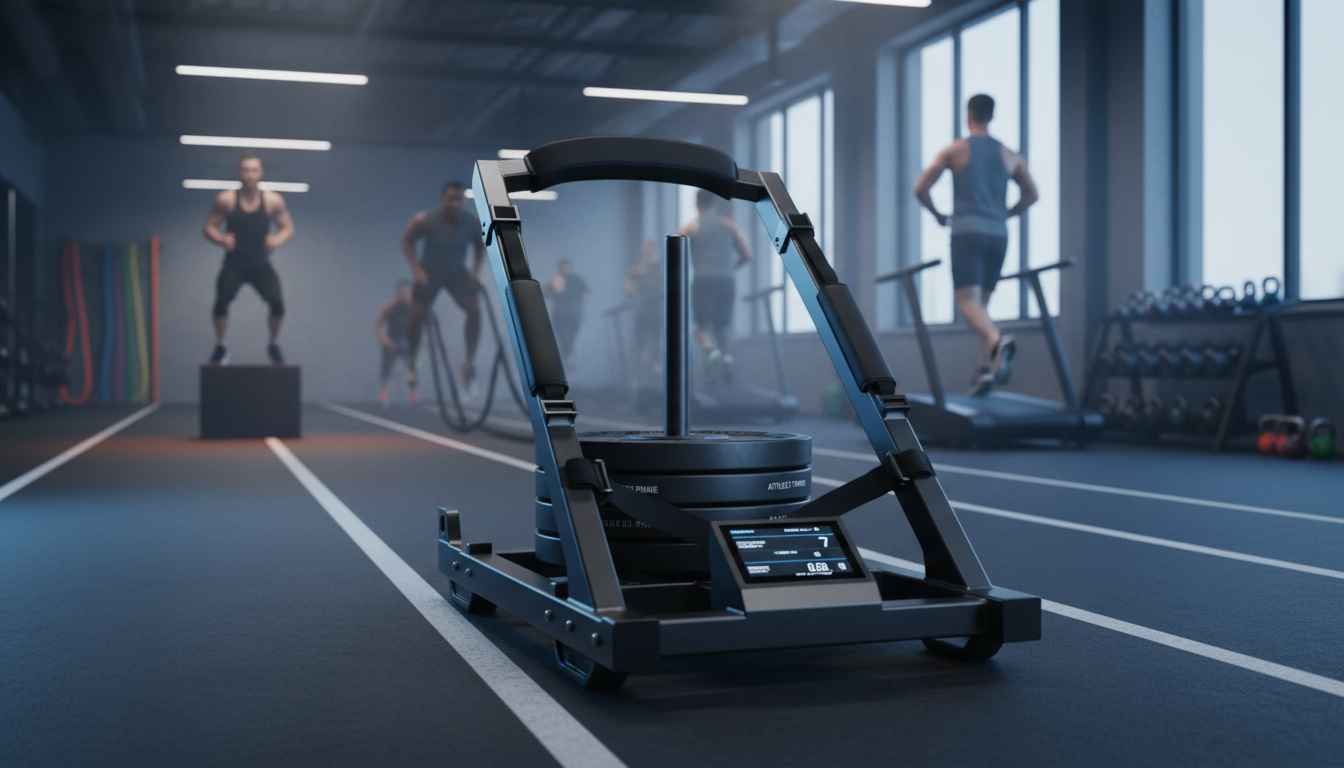
My grandmother used to say, “Strength comes from resistance,” and nowhere is that more literal than with the sports training sled. This deceptively simple piece of equipment has shaped athletes for decades, evolving from heavy wooden frames to sleek, metal designs that can be adjusted with precision weights.
1. Origins in Early Athletic Training
The sports training sled originated in the early 20th century as coaches sought ways to build lower body strength without expensive gym machinery. Initially, athletes would push or pull weighted carts on dirt tracks, mimicking the demands of sports like football and track. Early models were cumbersome, often requiring two people to load and unload heavy sandbags, but the concept proved effective.
2. Mid-Century Innovations
By the 1950s and 60s, sleds became more standardized in professional sports programs. Steel frames replaced wood, and designs incorporated adjustable weight plates. During this period, I personally made the mistake of overloading my sled during a preseason session, resulting in a pulled hamstring. That experience underscored the importance of proper resistance calibration and gradual progression.
3. Modern Era and Versatility
Today’s sports training sleds offer remarkable versatility. Athletes can perform pushing, pulling, and dragging movements with precise weight increments. Polyurethane bases and low-friction runners allow sleds to glide smoothly across turf, artificial surfaces, or tracks. A 2022 study showed that incorporating sled training twice weekly improved sprint acceleration by an average of 12 percent over eight weeks, highlighting its continued relevance.
4. Integration Into Athletic Programs
High-level programs, including collegiate teams, now integrate sled work into strength and conditioning routines. The Fordham University Athletics Rams, for example, use sleds for both endurance and explosive power development, emphasizing sport-specific angles of push and pull. Modern sleds also include harness systems and attachments for upper-body conditioning, expanding their utility beyond lower body focus.
5. Potential Drawbacks
Despite its benefits, sled training is not suitable for everyone. Beginners or athletes with pre-existing joint issues should approach resistance sled work cautiously. Incorrect technique or excessive load can lead to muscle strains, particularly in the hamstrings and lower back. Proper instruction and incremental progression remain essential for safe implementation.
The sports training sled has come a long way, evolving from simple weighted carts to sophisticated, adjustable systems that enhance athletic performance. Its history reflects a consistent principle: resistance training, when applied thoughtfully, remains a cornerstone of sports development.


