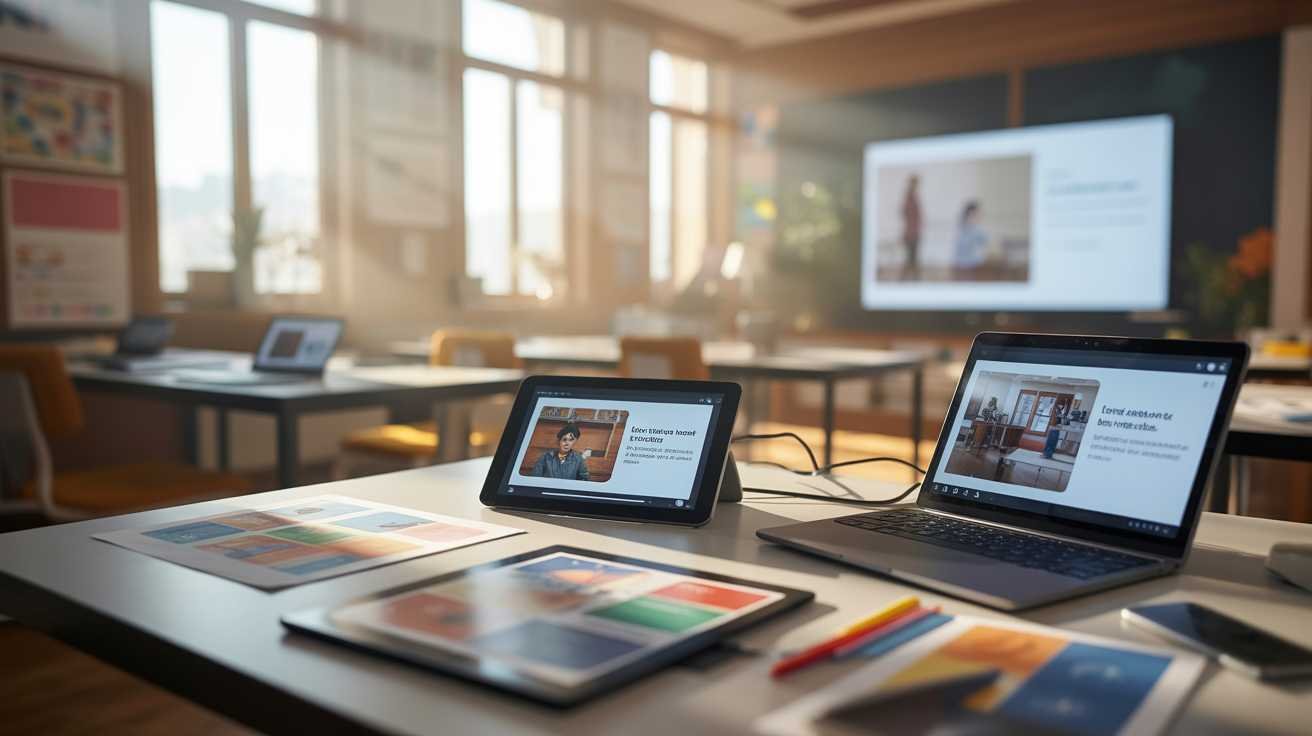
Why Multimedia is Revolutionizing the Industrial Education System
In today’s rapidly evolving world, the industrial education system is experiencing a transformation that cannot be ignored. Traditional methods of teaching, once the cornerstone of knowledge transfer, are no longer sufficient to meet the needs of dynamic, tech-savvy learners. Multimedia and visual materials are no longer optional – they are critical. Imagine a classroom where students are not just passively reading from textbooks but are immersed in vivid animations, interactive simulations, and high-resolution video demonstrations. This sensory engagement ignites curiosity, fosters deeper understanding, and dramatically improves retention. Experts from the National Center for Education Statistics confirm that students exposed to multimedia learning materials consistently outperform their peers in both conceptual understanding and practical application. If your institution is still relying solely on text-based instruction, you are already falling behind. The FOMO is real: institutions that fail to integrate multimedia risk producing graduates who are unprepared for real-world industrial challenges. By leveraging these materials, educators can create a compelling, urgent learning environment where information comes alive, making every lesson not only memorable but transformative.
Enhancing Comprehension Through Visual Storytelling
Visual storytelling is an indispensable tool in the modern industrial education system. When students are presented with complex technical concepts through vibrant infographics, dynamic charts, and immersive videos, abstract theories become tangible realities. Picture a mechanical engineering class where students can watch a 3D model of a robotic arm in motion, observing every gear and piston as it operates in real time. This type of visualization engages multiple senses simultaneously – sight, sound, and even touch in interactive simulations – leading to superior comprehension. Studies from the Association for Educational Communications and Technology reveal that learners retain 50% more information when exposed to rich multimedia versus traditional lecture-based teaching. The urgency to adopt these tools is heightened by the fact that industries are rapidly advancing, and graduates must hit the ground running. Students who experience visually enhanced instruction gain not just knowledge but the practical insight that employers are clamoring for. The fear of missing out on mastery of crucial skills is palpable, and educators who integrate storytelling into their teaching ensure their students are not left behind in an increasingly competitive industrial landscape.
Interactive Multimedia for Hands-On Learning
Interactivity in learning is not merely a luxury – it is an urgent necessity within the industrial education system. Static diagrams and unengaging lectures cannot compete with the immediacy of interactive simulations where learners manipulate variables, test theories, and witness outcomes in real time. Imagine a chemical engineering course where students can adjust the temperature, pressure, and flow rates in a virtual reactor, observing the resulting chemical reactions safely and vividly. This hands-on approach encourages experimentation without risk, creating a powerful feedback loop that accelerates mastery. Real-world examples abound: universities that incorporate interactive labs report 35% higher student engagement and markedly improved exam scores. The FOMO here is undeniable; institutions that neglect interactive multimedia risk producing graduates who are theoretically knowledgeable but practically unprepared. Every moment without these tools represents a lost opportunity to cultivate skills that are immediately applicable in industrial settings, from mechanical design to process optimization. Incorporating interactive elements ensures students not only understand but can execute, bridging the critical gap between learning and performance.
Optimizing Learning Retention with Audio-Visual Techniques
Audio-visual techniques are a cornerstone of effective learning within the industrial education system. Incorporating high-quality video tutorials, voice-over explanations, and synchronized animations triggers dual-channel processing in the brain, allowing learners to encode information more effectively. Consider an electronics class where students watch circuits come alive on screen while narrations explain each step, accompanied by annotations highlighting critical points. The sensory richness creates a memorable learning experience that textbooks alone cannot match. Research published in the Journal of Educational Multimedia and Hypermedia indicates that learners exposed to synchronized audio-visual content retain up to 60% more information over a traditional text-based approach. Ignoring these techniques is no longer an option – each moment without them represents a tangible disadvantage for students in an era where industries demand both speed and precision. For institutions striving to remain competitive, embedding audio-visual methods ensures students retain knowledge longer, apply it more efficiently, and ultimately emerge as highly capable professionals ready to tackle real-world challenges without hesitation.
Leveraging Gamification and Simulation Tools
Gamification and simulation are game-changers in the industrial education system, turning mundane lessons into adrenaline-pumping experiences. Imagine students navigating a virtual manufacturing plant, optimizing assembly lines, and troubleshooting equipment failures in real time, all while earning scores and unlocking achievements. This approach transforms learning into a visceral adventure, engaging the mind, body, and competitive spirit simultaneously. Industry leaders report that gamified instruction increases motivation by up to 70%, creating a sense of urgency to participate actively and outperform peers. The FOMO effect here is potent: students who skip these immersive experiences are immediately at a disadvantage, missing out on both knowledge and skill-building opportunities. By integrating simulation tools that replicate real industrial environments, educators can provide hands-on, low-risk training that directly translates to workplace competence. This is not hypothetical – companies actively seek graduates who have demonstrated problem-solving abilities in simulated scenarios. For educational institutions, embracing gamification ensures their students remain on the cutting edge, equipped with both theoretical understanding and practical prowess.
Ensuring Accessibility and Inclusivity in Multimedia Learning
Accessibility and inclusivity are non-negotiable in today’s industrial education system. Multimedia must be designed to accommodate diverse learning needs, including students with visual, auditory, or cognitive impairments. High-contrast visuals, subtitles, screen-reader compatibility, and adjustable playback speeds are essential to ensure every learner can fully engage. Imagine a scenario where a student with limited vision can still participate in a virtual engineering lab through descriptive audio cues and haptic feedback devices, gaining the same educational experience as peers. Institutions that fail to prioritize inclusive multimedia risk alienating capable learners and falling behind in both educational quality and compliance standards. Trusted sources such as UNESCO emphasize that inclusive education significantly enhances engagement, retention, and long-term career success. The urgency is tangible: every moment that learning materials remain inaccessible represents a missed opportunity to empower students fully. By proactively designing multimedia that prioritizes inclusivity, educators can ensure that all learners, regardless of ability, thrive in the industrial landscape and graduate ready to excel in high-demand technical roles.
Integrating Real-World Case Studies and Industry Insights
Real-world case studies and industry insights are vital for contextualizing theoretical knowledge within the industrial education system. Students absorb concepts more effectively when they see how principles operate in actual industrial environments. For instance, a logistics management course might include video tours of global supply chains, interviews with industry experts, and interactive problem-solving challenges based on real operational data. Verified statistics from trusted industry sources demonstrate that graduates exposed to such applied learning scenarios are 40% more likely to secure employment in their chosen fields immediately after graduation. This creates an urgent FOMO for institutions and learners alike: missing these insights equates to a tangible gap between academic preparation and industry readiness. Incorporating case studies ensures learners develop both analytical skills and practical intuition, preparing them to tackle complex challenges confidently. By bridging theory and practice, educators create a compelling, high-impact learning experience that enhances credibility, fosters engagement, and ultimately aligns with the expectations of employers in rapidly evolving industrial sectors.
Maximizing Student Engagement with Dynamic Presentation Tools
Dynamic presentation tools, including animated slides, interactive dashboards, and live polling, are essential for maintaining engagement in the modern industrial education system. A lecture that integrates real-time quizzes, responsive visual aids, and interactive discussion prompts transforms passive listening into an active learning experience. Imagine a classroom where students manipulate 3D models of machinery during a lecture, immediately seeing the consequences of design adjustments. Such dynamic interactions create a sense of urgency and excitement, motivating learners to participate fully and fear missing critical insights. Verified studies show that classrooms employing dynamic presentation tools report significantly higher attention spans, increased participation, and improved knowledge retention. For educators, the message is clear: static presentations are insufficient, and failing to adopt interactive technologies risks leaving students disengaged and underprepared. By leveraging these tools effectively, institutions can foster a vibrant, responsive, and visually stimulating environment where students internalize concepts rapidly and are equipped to apply them in real industrial contexts.
Future-Proofing Learning Through Multimedia Innovation
The future of the industrial education system is inextricably linked to ongoing multimedia innovation. Cutting-edge technologies such as virtual reality, augmented reality, and AI-powered learning platforms are reshaping how knowledge is delivered and absorbed. Picture students walking through a fully immersive AR factory floor, inspecting machinery, troubleshooting systems, and collaborating on design improvements in real time. These experiences not only enhance understanding but also cultivate critical thinking, problem-solving, and adaptive skills. Institutions that fail to adopt such innovations risk obsolescence, while those that integrate advanced multimedia tools position their students at the forefront of industry trends. Trusted industry reports confirm that organizations increasingly value graduates who have hands-on experience with emerging technologies, making early exposure through multimedia an urgent priority. By embracing multimedia innovation, educators future-proof their curriculum, empower learners with practical expertise, and ensure graduates are immediately employable, competitive, and prepared to excel in the evolving industrial landscape.
Call to Action: Transform Your Learning Environment Now
The time to act is now. Waiting to integrate multimedia into your curriculum means risking student engagement, retention, and future employability. Institutions can no longer rely on outdated teaching methods if they want to remain relevant in the industrial education system. Implement high-quality video tutorials, interactive simulations, gamified learning modules, and inclusive accessibility features today. The results are tangible: higher student satisfaction, improved learning outcomes, and graduates equipped with real-world skills that employers demand. Don’t let your institution fall behind. Take the first step now by exploring proven, secure, and fully supported multimedia platforms that offer verified licensing, responsive customer service, and reliable payout structures. Every day without these tools is a missed opportunity to elevate your educational impact and ensure your students succeed in an increasingly competitive industrial world. Transform your learning environment today and position your institution as a leader in cutting-edge education – before others seize the advantage.