
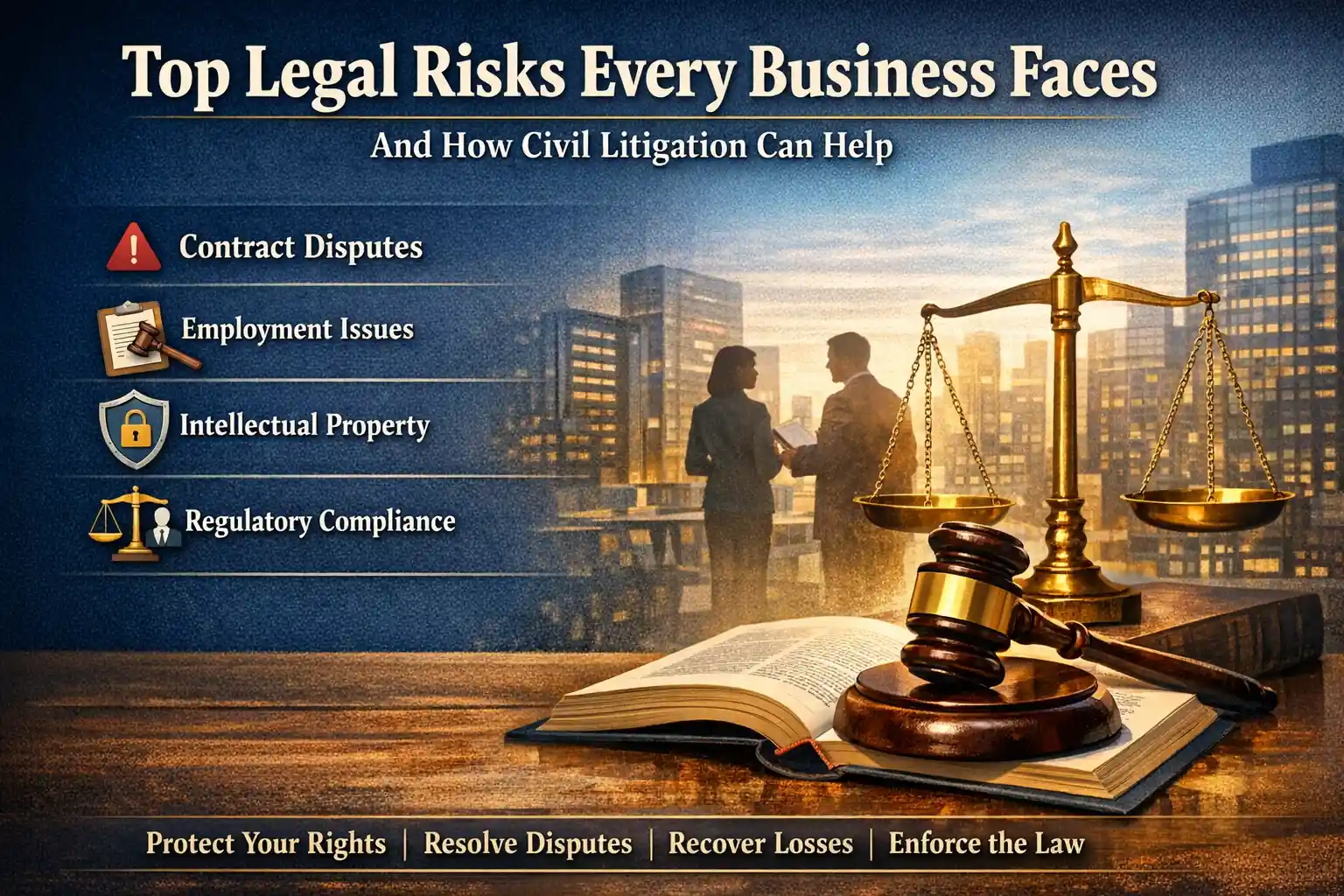
Every business carries legal risk. Some exposures sit in the background for years, then suddenly surface as a dispute that threatens cash flow, reputation, or even survival. Many owners focus on sales, hiring, and growth, and only think about court when a claim form arrives.
Civil litigation is not only about “fighting a case”. It provides structured tools to enforce rights, stop harmful behaviour, and manage serious conflict when negotiation alone no longer works. Understanding the main legal risks and how litigation can assist puts a business in a far stronger position when trouble starts.
Contract Disputes and Breach of Agreement
Contractual problems often surface first because every business relies on suppliers, clients, and partners to meet agreed obligations. A small error in a written agreement or a failure to meet deadlines can cause delays, loss of income, or shutdowns of essential services. Common triggers include missed delivery dates, incorrect specifications, payment disputes, and disagreements around performance standards.
Courts play an important role when informal discussions break down. Civil litigation enables a company to enforce its contractual rights through a clear legal mechanism. This may involve seeking damages to compensate for financial loss or asking the court to require the other party to meet its obligations.
Moreover, detailed evidence, such as correspondence, performance records, invoices, and signed agreements, often makes the difference between winning and losing a claim. Preparing these documents from the start reduces risk and strengthens a company’s position.
Debt Recovery and Unpaid Invoices
Late or unpaid invoices place immediate strain on cash flow. Businesses that operate on tight margins feel the impact quickly, especially when clients repeatedly delay payment. Some debtors avoid communication altogether or dispute charges to hold off payment.
Civil litigation helps a business recover what it is owed. A formal claim alerts the debtor that the matter is no longer optional. If the debtor continues to ignore the claim, the court can issue a judgment. With a judgment in place, the creditor can use various enforcement methods such as charging orders, attachment of earnings, third-party debt orders, or instructing enforcement officers. These steps send a clear message that payment is not negotiable. The court process also helps filter out disputes that were never genuine in the first place.
Employment-Related Legal Risks
Employment disputes are frequent sources of conflict. Claims relating to dismissal, discrimination, unpaid wages, or workplace practices can arise from misunderstandings, poor communication, or failure to follow processes. An internal issue can escalate into a legal claim quickly when procedures are inconsistent or poorly documented.
Civil litigation enters the picture when internal steps fail to resolve the problem. For example, wrongful dismissal or discrimination claims often require careful handling due to financial exposure and reputational impact. Written records, training logs, policy documents, and witness statements play a large role in defending the business. Litigation creates a clear structure for presenting evidence, addressing allegations, and reaching a conclusion that protects the company’s interests.
Intellectual Property Misuse and Theft
Intellectual property holds significant value for businesses that rely on original products, designs, processes, content, or technology. Issues arise when former employees, competitors, or external parties copy, distribute, or use protected material without consent. Misuse can damage market share, dilute brand identity, and undermine years of development.
Civil litigation offers remedies that can stop the misuse quickly. Companies can seek urgent court orders that prevent the other party from continuing the harmful activity. They can also claim damages for loss caused by the infringement or ask for the return or removal of copied material. Strong records of ownership, registration documents, and evidence that the other party had access to the material often strengthen these cases.
Shareholder and Partnership Disputes
When shareholders or partners fall out, the entire business can suffer. Disputes often stem from differences in company direction, misuse of funds, exclusion from decision-making, or allegations of unfair conduct. These conflicts can bring operations to a halt if major decisions depend on agreement between owners.
Civil litigation can help resolve these disputes through court proceedings such as unfair prejudice petitions or actions for breach of fiduciary duty. The court can order the sale or transfer of shares, appoint independent experts, or set out a clear resolution to restore stability. Detailed financial records, meeting minutes, and company documents often play a decisive role.
Regulatory and Compliance Failures
Regulatory breaches bring fines, investigations, and reputational harm. Common problems include incorrect reporting, poor record-keeping, failure to meet safety requirements, or breaches of industry standards. Regulators can demand corrective action or restrict trading activities until issues are resolved.
Civil litigation may come into play when a business contests a regulator’s decision or the severity of penalties imposed. Court action provides a route to challenge enforcement notices, financial penalties, or licence restrictions. Success depends on thorough evidence, including audit records, correspondence with the regulator, and internal policies that show the company acted responsibly.
Defamation and Reputation Damage
Public statements, social media posts, online reviews, and comments by competitors can harm a company’s public image. False claims can lead to loss of clients, cancelled contracts, and long-term damage to credibility. Quick and controlled action is essential because reputational harm spreads fast.
Civil litigation allows businesses to address false statements through formal legal action. The court can order removal or correction of the statements and award compensation where appropriate. For success, evidence must show that the statements were untrue and caused measurable loss. Screenshots, communication records, and examples of business loss are key.
Property and Commercial Lease Disputes
Property issues affect companies that lease, rent, or own commercial premises. Disputes arise around service charges, maintenance obligations, repairs, rent arrears, or claims that the landlord or tenant has broken the agreement. These issues can interrupt operations or cause unnecessary expense.
Civil litigation helps resolve these disputes through structured court processes. Depending on the case, the business might seek possession of the property, enforcement of lease terms, or compensation for financial loss. Accurate lease agreements, inspection reports, and communication records support a stronger claim.
How civil litigation lawyers strengthen business protection
Many owners see litigation as something to avoid at all costs. In reality, the threat of credible legal action is often the only language that some counterparties understand. Used carefully, litigation supports risk management rather than replacing it.
- Review standard contracts, policies, and procedures through a dispute lens, spotting clauses that regularly cause conflict
- Help design internal escalation routes so smaller disagreements are tackled before they grow
- Train managers on recording evidence, keeping clean correspondence, and avoiding admissions that create legal exposure
- Provide early case assessments that set realistic expectations on cost, outcome, and timescale
When disputes arise, litigation specialists bring structure. They gather evidence, manage correspondence, engage in negotiation from a position of strength, and prepare cases for hearing if settlement is not reached.
FAQs
How can a business tell when a dispute is likely to escalate into litigation?
Early warning signs include unresponsive counterparties, sudden disputes raised after long periods of silence, shifting explanations, refusal to provide documents, and aggressive emails. When communication becomes inconsistent or hostile, escalation is likely. Seeking early legal input helps the business control the direction of the dispute.
What documents should a business keep in case it ever faces a claim?
Key evidence includes signed contracts, emails confirming terms, invoices, proof of delivery, meeting notes, HR records, financial accounts, and copies of marketing materials. Consistent document retention systems make it easier to defend a claim or prove loss without scrambling to rebuild the record later.
Can a business recover its legal costs if it wins a case?
In many civil claims, the winning party can recover a portion of its legal costs. The amount depends on the complexity of the case, conduct of both parties, and any offers made during litigation. Even when costs are awarded, recovery is rarely full, so businesses should plan for some shortfall.
How long does civil litigation usually take?
Timeframes vary considerably. Straightforward debt claims may resolve within months, while complex shareholder disputes or IP cases can last one to two years or longer. Cases often settle before trial. Early evidence gathering, clear objectives, and timely responses help reduce delays.
What is the difference between mediation and court proceedings?
Mediation is a structured negotiation with an independent mediator who helps the parties reach a voluntary agreement. It is private, quicker, and usually less costly. Court proceedings are formal, follow strict rules, and end with a binding decision. Many businesses try mediation first to keep conflict under control.


