
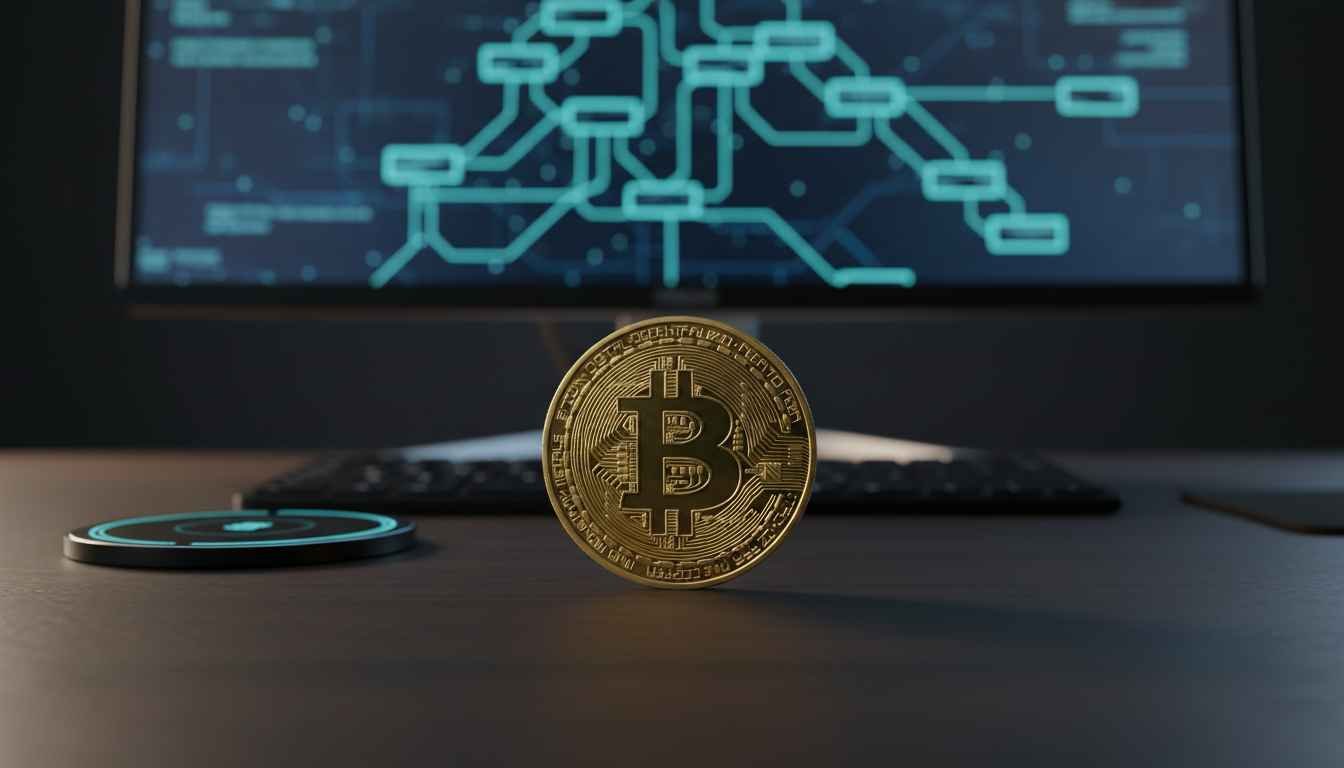
Imagine if you could carry your entire wealth in a small device no bigger than a credit card, and move it across the globe instantly, without asking anyone for permission. Sounds like science fiction, right? But that’s exactly the promise Bitcoin offers – a decentralized, digital currency that isn’t controlled by any government, bank, or corporation. It’s a technology that rewrites the rules of money, and looking back, I wish my younger self had grasped it sooner.
Back in the early 2000s, I was obsessed with DIY projects – building gadgets, coding small programs, experimenting with electronics. The idea of building your own financial system from scratch would have thrilled me. Bitcoin, launched in 2009 by the mysterious Satoshi Nakamoto, is that experiment brought to life. At its core, Bitcoin is a peer-to-peer network that allows users to transact directly without intermediaries. Every transaction is recorded on a public ledger called the blockchain, which ensures transparency and security.
The blockchain is essentially a chain of blocks, each containing transaction data. Each block is linked to the previous one through cryptographic hashes, making it practically impossible to alter past records. If you think of it like a LEGO tower, every new block is a LEGO piece that locks the previous one in place. This structure guarantees integrity without relying on a central authority. If my younger self could have seen the elegance of this system – the way mathematics ensures trust – I would have been hooked instantly.
Now, Bitcoin isn’t just a fancy tech concept; it’s also a store of value and a medium of exchange. Its total supply is capped at 21 million coins, which introduces scarcity similar to precious metals like gold. This scarcity, combined with the decentralized design, is what gives Bitcoin its value. Unlike traditional money that can be printed at will, Bitcoin’s issuance is predictable, with miners earning new coins as they validate transactions – a process called mining. Mining uses computational power to solve complex mathematical puzzles, securing the network while rewarding participants.
For someone eager to dive in, a few tools can make the journey smoother. Recommended tools include hardware wallets like Ledger or Trezor for secure storage, software wallets such as Electrum, and tracking platforms like CoinMarketCap for market insights. Exchanges with good liquidity and competitive prices are critical for trading efficiently, and platforms like BitKan can help consolidate multiple exchanges in one interface, making the process less intimidating for newcomers.
Why Bitcoin Matters
Bitcoin’s significance goes beyond trading or speculation. It represents a shift in how we think about money and trust. Traditionally, trust is centralized in banks, governments, or payment processors. Bitcoin replaces that centralized trust with cryptographic trust and consensus mechanisms. Every transaction is independently verifiable by anyone, creating a transparent and auditable system. This decentralization is revolutionary, especially in regions where financial systems are unstable or heavily controlled.
Consider countries experiencing hyperinflation. A citizen holding Bitcoin can preserve wealth in a form that cannot be arbitrarily devalued. Even beyond financial use cases, the underlying blockchain technology inspires applications in supply chain management, digital identity, and secure voting systems. For a DIY-minded person, experimenting with Bitcoin and blockchain development opens doors to creating tools and solutions that were previously impossible.
Potential Drawbacks
However, Bitcoin isn’t perfect. The first challenge is volatility. Prices can swing dramatically in short periods, which can be stressful if you’re treating it like a conventional savings account. Mining and transactions also require energy, which raises environmental concerns. Additionally, since Bitcoin transactions are irreversible, sending funds to the wrong address means losing them permanently. Security is paramount, and beginners must learn proper wallet management and backup procedures. Finally, the speculative hype around Bitcoin sometimes attracts scams and fraudulent schemes, so discernment is crucial.
Who Should Avoid This
If you are risk-averse or rely on a stable daily cash flow, Bitcoin might not be ideal for your financial strategy. People who are not willing to invest time in learning the technology, securing their wallets, or understanding market risks should approach cautiously. For younger enthusiasts or those curious, though, learning Bitcoin – even without investing significant capital – provides invaluable insight into the future of money.
How to Start Exploring Bitcoin
Start by creating a secure wallet. Hardware wallets are the gold standard, but software wallets are fine for experimentation. Next, consider exploring test networks where you can practice sending and receiving Bitcoin without real risk. Read widely: Satoshi Nakamoto’s original Bitcoin whitepaper is surprisingly accessible and provides foundational knowledge. Then, experiment with small trades to understand price dynamics and the mechanics of exchanges. Learning by doing, like any DIY project, is the most effective path.
Tracking your transactions, studying market trends, and understanding the social and technical layers of Bitcoin will equip you with both practical and theoretical knowledge. Think of it like building your first circuit or coding your first app – you’ll learn more by actually tinkering than by passively reading. Over time, you’ll see how Bitcoin connects to broader economic principles, digital privacy concerns, and even global geopolitics.
The Long-Term Perspective
Bitcoin isn’t just a passing trend. Its design encourages long-term thinking. While prices fluctuate wildly, the underlying network continues to grow and mature. As adoption increases, it could fundamentally reshape finance, providing alternatives to traditional banking and giving individuals more control over their wealth. My younger self would have marveled at the idea that a purely digital asset could challenge centuries-old systems and inspire a generation of innovators to rethink how money works.
Ultimately, understanding Bitcoin is about embracing curiosity, experimenting responsibly, and thinking critically about the implications of decentralized technology. It’s a blend of nerdy fascination, financial strategy, and DIY innovation all rolled into one. If I could go back, I’d tell myself: build, experiment, secure, and observe – Bitcoin is as much about learning as it is about earning.


