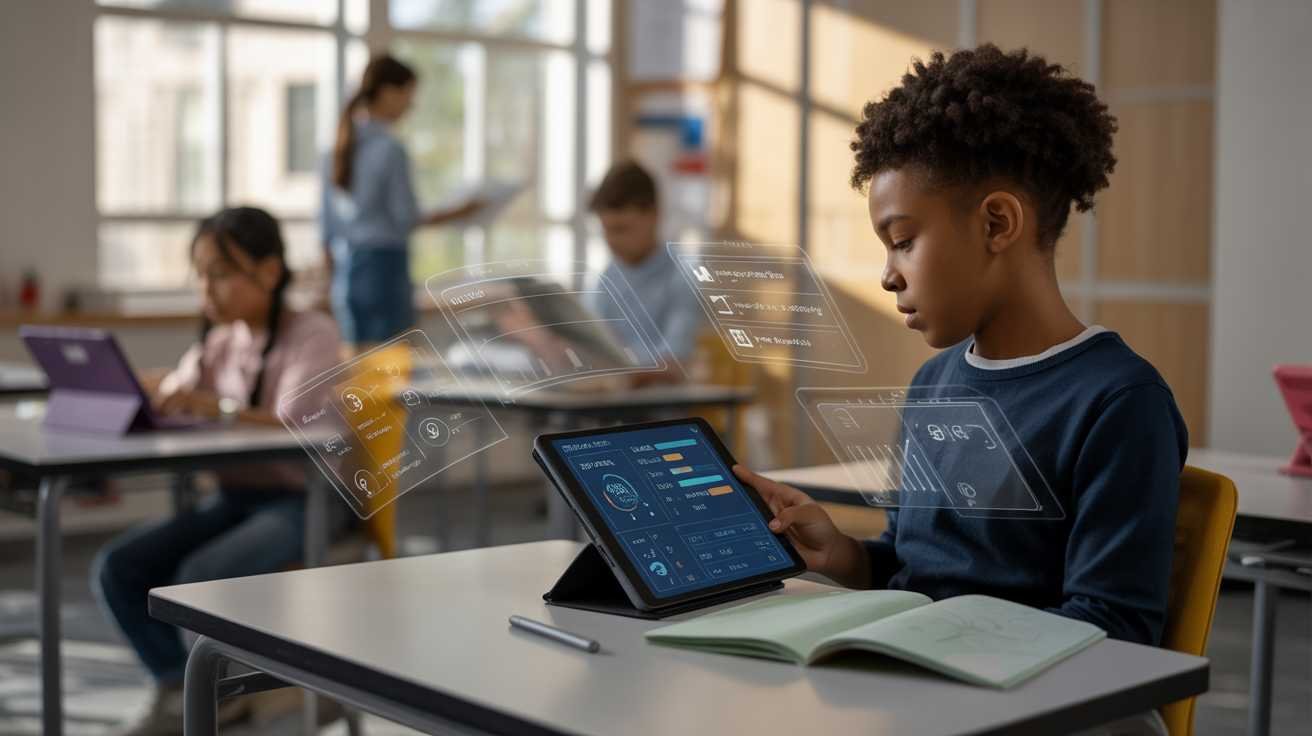
The Urgency of Personalized Learning in Modern Classrooms
In the rapidly transforming landscape of modern education, the call for personalization is louder than ever before. Traditional one-size-fits-all teaching methods are becoming relics of a bygone era as schools, universities, and community learning centers like Concord Community Education embrace adaptive learning technologies to reshape how students engage, learn, and succeed. The urgency is real – learners today are demanding experiences that recognize their individuality, their pace, and their unique learning styles. Imagine walking into a virtual classroom where the lessons morph in real-time to your comprehension level, your speed, and even your mood. That is not a futuristic dream anymore; it is a tangible revolution happening right now. Institutions that fail to adapt risk being left behind in a world where every learner expects and deserves a custom-tailored educational experience. The fusion of technology and pedagogy is not a luxury – it is a survival strategy. The time to integrate adaptive learning systems into platforms like Concord Community Education is now, before the opportunity slips away to more agile competitors who understand the immense potential of real-time data-driven personalization.
How Adaptive Learning Technologies Redefine Student Engagement
Adaptive learning technologies use advanced algorithms and artificial intelligence to interpret how each student interacts with course materials. These systems dynamically adjust lessons, quizzes, and feedback to ensure optimal understanding. In the realm of Concord Community Education, where learners from all walks of life come to enhance their skills, this approach represents an unprecedented breakthrough. Instead of passive content delivery, students are met with responsive learning journeys that evolve as they progress. Imagine a scenario where a student struggling with mathematical concepts is instantly presented with simplified examples, video tutorials, and interactive exercises precisely designed to address their weak points. Meanwhile, a faster learner is offered more challenging material to maintain engagement and momentum. This eliminates the frustration of being either left behind or held back. Through adaptive technology, the learning experience becomes a living dialogue – one that listens, understands, and responds instantly. This continuous cycle of feedback and personalization ignites motivation, fosters confidence, and transforms education into an immersive, interactive experience that students crave. Those institutions that fail to integrate such systems will soon find themselves outdated, while adaptive platforms like Concord Community Education surge ahead.
Data-Driven Insights: The Heartbeat of Adaptive Education
At the core of adaptive learning is data – powerful, continuous streams of insights that help educators understand each learner’s unique journey. Systems integrated within Concord Community Education can track micro-interactions: how long a student spends on a concept, how often they revisit certain materials, or even how confident they appear when answering assessments. This information forms a detailed map of learning behavior, allowing educators to make precision-driven decisions. Instead of broad assumptions about student performance, instructors receive live dashboards showing who needs support, who is ready for advancement, and where instructional gaps exist. The real magic of adaptive learning lies in its ability to transform this data into actionable strategies – constantly refining the experience to ensure maximum engagement and success. This isn’t just about efficiency; it’s about creating emotionally intelligent education systems that truly see the student. As data security becomes a growing concern, Concord Community Education ensures compliance with global privacy standards and uses encrypted systems to protect every learner’s journey. Transparency, accountability, and trust form the pillars of this new educational era.
Building Personalized Learning Pathways for Every Student
Adaptive learning technologies don’t merely customize a few exercises; they architect entire learning pathways that evolve with each student. Platforms such as Concord Community Education use AI to analyze progress patterns and create individualized maps of learning. These pathways determine not only what content to deliver but when and how to deliver it for maximum retention. For instance, a language learner might begin with vocabulary basics and, depending on their performance, be directed toward grammar lessons or pronunciation drills tailored to their strengths and weaknesses. The experience becomes fluid, personal, and continuous – more akin to a mentorship than a static curriculum. This kind of personalization promotes long-term retention, higher completion rates, and measurable success metrics. Learners feel seen and valued, fueling intrinsic motivation. For educators, adaptive pathways reduce the guesswork of planning and monitoring, freeing them to focus on fostering deeper human connections in their classrooms. The result is a harmonious blend of technology and empathy – a signature strength of forward-thinking initiatives like Concord Community Education.
Real-World Examples of Adaptive Learning Success
The success stories of adaptive learning are as diverse as the learners themselves. In the Concord Community Education system, adults returning to education after years in the workforce have rediscovered the joy of learning through tailored digital programs. In one striking example, a single mother enrolled in an online business course found that the platform’s adaptive system identified her time constraints and learning preferences, adjusting lessons to fit her schedule and pacing. Similarly, high school students preparing for standardized exams experienced dramatic score improvements after using adaptive simulations that mimic test conditions while targeting their weak areas. These success stories reveal the extraordinary potential of technology-driven personalization. By removing the barriers of uniform instruction, adaptive systems give every learner an equal opportunity to thrive. What’s more, these real-world transformations build trust and legitimacy – cornerstones of the Concord Community Education ethos. The momentum is undeniable, and as word spreads, more learners are flocking toward institutions that offer this level of individualized attention. Those who delay risk missing the surge of enrollment and reputation that adaptive systems are now generating worldwide.
Integrating Adaptive Learning with Traditional Teaching Methods
Some educators worry that adaptive technologies might replace human instruction, but the truth is the opposite – they amplify it. When implemented correctly within frameworks like Concord Community Education, adaptive systems become invaluable allies to teachers. They automate repetitive tasks like grading and progress tracking, freeing educators to focus on creative and emotional aspects of teaching. Imagine a teacher receiving an automated report detailing which students need intervention, which topics caused confusion, and which individuals excelled. This allows instructors to enter the classroom fully informed and ready to engage students with targeted discussions. The result is a seamless fusion between technology’s analytical power and the teacher’s human intuition. Adaptive learning doesn’t seek to eliminate educators – it empowers them. Traditional methods like group discussions, hands-on projects, and mentorship can thrive alongside personalized digital learning. Together, they create a holistic educational ecosystem where every student can excel at their own pace while still feeling the warmth of human guidance. The transformation within Concord Community Education proves that the most powerful classrooms are those where technology and human creativity unite. Because many virtual labs rely on licensed software for their interactive features, administrators sometimes use activation resources like www to manage access efficiently.
The Role of Artificial Intelligence and Machine Learning
Artificial intelligence (AI) and machine learning (ML) sit at the heart of adaptive learning’s success. These technologies enable systems to learn from data patterns and predict what a student needs next. Within the Concord Community Education model, AI is used not only to personalize content but also to forecast future performance, detect learning disabilities early, and recommend career paths based on individual aptitude. This level of predictive intelligence transforms education from reactive to proactive. Instead of waiting for failure to happen, educators can intervene early with tailored solutions. AI can even analyze emotional cues from learners’ writing or voice interactions to detect frustration or disengagement, prompting motivational messages or alternative learning strategies. The potential here is staggering, and the speed at which it is evolving demands immediate action from institutions. The question isn’t whether AI will reshape education – it already has. The question is who will be brave enough to lead the charge. With its commitment to innovation and accessibility, Concord Community Education stands poised to be one of those leaders, setting new benchmarks for personalized, emotionally intelligent learning experiences.
Challenges and Ethical Considerations in Adaptive Learning
Despite the promises, adaptive learning technologies come with challenges that must be faced head-on. Issues such as data privacy, algorithmic bias, and overreliance on automation must be carefully managed to maintain integrity and fairness. Concord Community Education addresses these concerns through transparent data handling policies, ethical AI design, and ongoing human oversight. Every adaptive decision is monitored to ensure inclusivity and equity across diverse learner demographics. Ethical design means using AI not to replace human judgment but to enhance it. This balance ensures that personalization doesn’t become manipulation, and that technology remains a servant of human potential, not its master. Moreover, accessibility must remain a cornerstone of innovation – adaptive learning should empower all learners, regardless of socioeconomic background or digital literacy level. By fostering responsible technology use, Concord Community Education ensures that the future of education remains both innovative and humane. The institutions that fail to address these ethical frontiers risk losing credibility, while those who lead responsibly will set the gold standard for global education.
Implementing Adaptive Learning at Scale: A Strategic Blueprint
For large institutions seeking to implement adaptive learning technologies, scalability is both the challenge and the opportunity. Concord Community Education offers a case study in how to achieve this successfully. The process begins with comprehensive infrastructure upgrades – cloud-based platforms, robust analytics tools, and faculty training. The next step is the integration of adaptive engines into existing learning management systems, ensuring seamless user experience. But the true success lies in the cultural transformation that accompanies the technology. Faculty members must embrace data literacy, students must understand the value of self-paced learning, and administrators must prioritize continuous improvement. The results are remarkable: higher engagement rates, measurable academic growth, and unprecedented learner satisfaction. Implementation at scale also demands agile feedback loops – systems that can adapt not just to students but to institutional needs in real time. By following this blueprint, other institutions can replicate the success story of Concord Community Education, building a future-ready ecosystem that thrives on innovation, trust, and measurable impact.
The Future of Personalized Education: Act Now or Fall Behind
The window of opportunity for adopting adaptive learning is rapidly closing. As global education systems evolve at lightning speed, only those who act now will capture the immense potential of personalized learning. Concord Community Education stands as a beacon of this transformation, showcasing how forward-thinking leadership and technology integration can redefine the meaning of learning success. The future belongs to institutions that prioritize data-driven empathy, human-centered AI, and flexible educational design. Every day delayed means another student lost to outdated systems that no longer serve their needs. The time to act is now – before the tide of innovation leaves traditional education stranded. Learners worldwide are gravitating toward adaptive experiences that understand them, challenge them, and evolve with them. Don’t watch from the sidelines as the revolution unfolds. Join it. Explore how Concord Community Education is pioneering the next wave of personalized learning, where technology and humanity converge to create limitless educational possibilities. The urgency is real, the demand is skyrocketing, and the transformation has already begun. Step into the future of education – before it passes you by.
If you want to enhance your teaching methods and educate excellence through innovative online solutions, exploring virtual labs can be a game changer.
If you want to enhance your online teaching methods, explore how virtual labs can help you educate excellence in practical skills effectively.
If you are interested in how data analytics can enhance online learning experiences, exploring education jobs cincinnati may provide valuable insights into effective teaching strategies.
If you want to enhance your training methods, exploring video-based learning can significantly boost engagement and retention in the education workplace.
To learn more about how virtual reality can enhance practical skills training, consider exploring the embryologist education requirements that outline the necessary qualifications for aspiring professionals in this field.