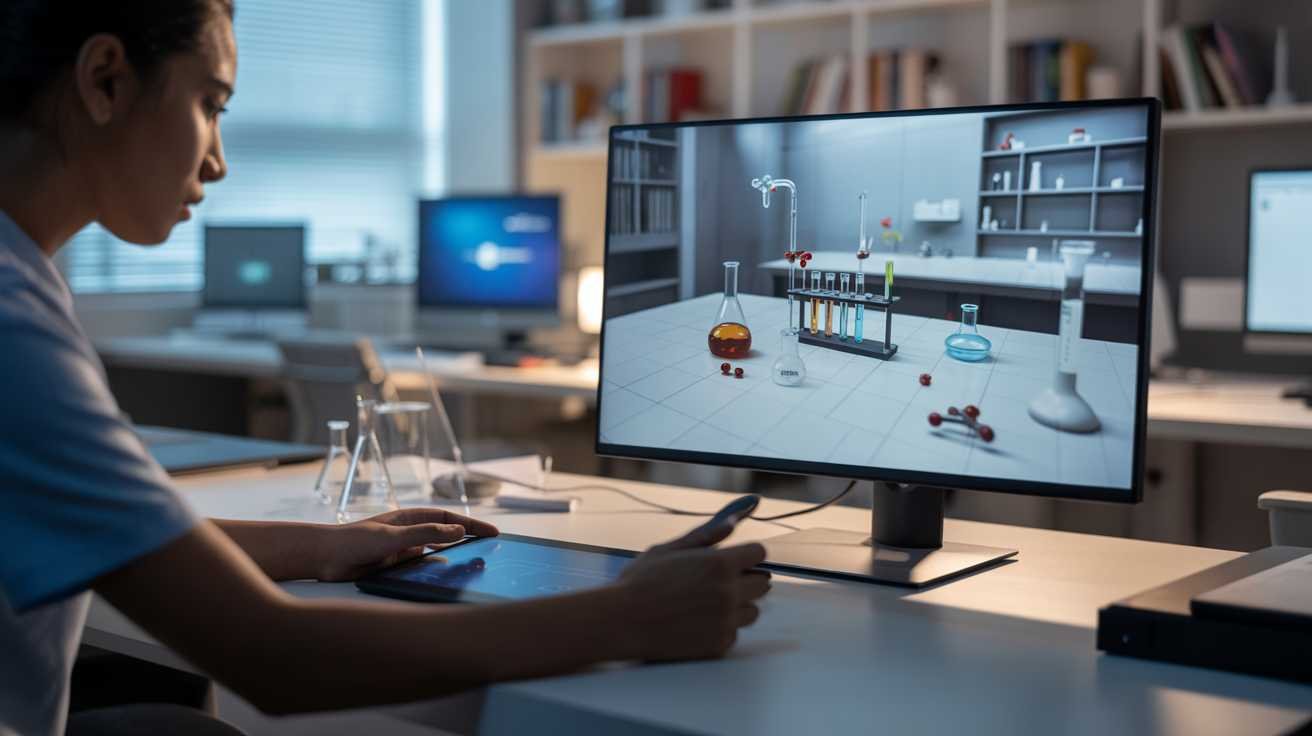
Understanding the Urgency of Virtual Labs in Modern Education
In today’s fast-paced digital landscape, the traditional classroom is no longer enough to satisfy the growing demand for hands-on, practical learning. Institutions worldwide are racing to implement virtual labs that bridge the gap between theoretical knowledge and real-world application. The urgency is palpable: students who lack access to these dynamic, interactive environments risk falling behind in competitive fields like engineering, medicine, biotechnology, and computer science. By embracing virtual labs, educators can provide a fully immersive experience that engages multiple senses, from manipulating complex simulations to visualizing chemical reactions in vivid 3D models. For those striving to educate excellence, the stakes have never been higher. Delaying integration means missing out on transformative learning experiences that could redefine the student journey, foster innovation, and cultivate a new generation of leaders equipped to excel in practical skills.
Creating Realistic and Immersive Simulations
The heart of any successful virtual lab lies in its ability to replicate real-world scenarios with precision and sensory depth. Immersive simulations should allow students to interact with equipment, observe outcomes in real time, and adapt to experimental variables just as they would in a physical lab. For example, a biotechnology student can manipulate pipettes and reagents virtually, seeing the reactions unfold with detailed animations, precise timing, and dynamic feedback. These simulations, developed with licensed software and tested for accuracy by verified industry professionals, ensure that learning is both safe and impactful. For educators and institutions eager to educate excellence, integrating these high-fidelity simulations creates an experience that is not only engaging but indispensable for mastering practical skills online.
Ensuring Accessibility and Equity Across Student Populations
Virtual labs provide a crucial solution to the accessibility challenges faced by learners across the globe. Unlike traditional labs, which may be limited by geography, resources, or cost, virtual environments can be accessed anytime, anywhere, through secure platforms that support multiple devices. This level of accessibility ensures that all students, regardless of socio-economic background, have equal opportunities to develop practical expertise. Furthermore, platforms that offer responsive customer support, verified payouts for lab usage, and compliance with security standards amplify trust and reliability. Institutions focused on educate excellence recognize that equitable access to high-quality virtual labs is essential for fostering a diverse and capable student body prepared to excel in their chosen fields.
Integrating Real-World Scenarios for Maximum Engagement
Virtual labs thrive when they incorporate realistic, real-world scenarios that resonate with students’ future professional experiences. Imagine a mechanical engineering student troubleshooting a virtual assembly line, encountering unexpected faults, and resolving them using practical problem-solving skills. These scenarios are designed based on verified industry data and consultation with professionals who understand the nuances of daily operations. By immersing learners in contexts that mimic authentic work environments, virtual labs enhance retention, build confidence, and elevate the learning process. Educators aiming to educate excellence leverage these high-impact simulations to ensure students leave their programs with actionable, market-ready skills.
Utilizing Gamification to Drive Motivation and Mastery
The integration of gamification elements in virtual labs amplifies student engagement and fosters a sense of urgency to participate fully. Points, badges, leaderboards, and timed challenges transform the learning process into an exciting, competitive, and highly interactive experience. For example, chemistry students can be scored on the precision and efficiency of their virtual titrations, with immediate feedback guiding them to refine techniques. These gamified experiences are rooted in evidence-based strategies that encourage mastery through repetition, problem-solving, and active participation. By embracing gamification, institutions committed to educate excellence can ensure learners are not just passively absorbing information, but actively applying skills in ways that mirror real-world challenges.
Incorporating AI-Driven Feedback and Assessment
Artificial intelligence plays a pivotal role in enhancing the effectiveness of virtual labs by providing real-time, adaptive feedback to students. AI algorithms can analyze performance, identify knowledge gaps, and offer personalized guidance, allowing learners to progress at their own pace while achieving mastery. For example, in a virtual electronics lab, an AI system can detect a misconfigured circuit and suggest corrective steps, simulating the mentorship a student would receive in a physical lab. This level of precision ensures that every interaction is meaningful and measurable, supporting educators who aim to educate excellence. Additionally, AI-powered analytics give instructors actionable insights into student progress, enabling targeted interventions that maximize skill acquisition and practical competency.
Maintaining Security, Licensing, and Verified Compliance
One of the most critical aspects of implementing virtual labs is ensuring that all platforms adhere to stringent security protocols, licensing requirements, and verified compliance standards. Sensitive data, proprietary simulations, and educational content must be protected against unauthorized access while providing reliable, continuous service. Institutions that prioritize these safeguards build trust with students, parents, and stakeholders, reinforcing their commitment to educate excellence. By leveraging platforms that offer encrypted data transfers, regular software audits, verified payouts for content creators, and robust technical support, educators ensure that the virtual lab experience remains professional, secure, and fully aligned with industry best practices.
Fostering Collaboration Through Virtual Team Projects
Collaborative projects in virtual labs simulate real-world teamwork and encourage the development of interpersonal, leadership, and problem-solving skills. Students can work together on complex experiments, share observations, and coordinate strategies, all within a virtual environment that supports instant communication, file sharing, and peer feedback. For instance, a virtual environmental science lab might involve a team analyzing water quality data, discussing interpretations, and proposing sustainable solutions. These collaborative opportunities enhance engagement, reinforce accountability, and create a dynamic learning culture. Institutions dedicated to educate excellence recognize that fostering teamwork in virtual labs not only prepares students for professional environments but also instills confidence and adaptability essential for lifelong learning.
Ensuring Continuous Support and Professional Development
For virtual labs to truly transform practical skills education, continuous support and professional development are non-negotiable. Instructors and students must have access to responsive customer service, detailed tutorials, troubleshooting guides, and live assistance to resolve any technical challenges. Additionally, professional development programs help educators master new virtual tools, refine instructional strategies, and remain updated on emerging technologies. These measures guarantee a smooth, enriching experience that drives excellence. Institutions committed to educate excellence invest in these ongoing support structures, ensuring that every participant can leverage the full potential of virtual labs without delays, frustrations, or learning gaps, thus reinforcing the urgency of adoption.
Maximizing Learning Outcomes with Data-Driven Insights
Virtual labs are not just platforms for interaction – they are rich data ecosystems that provide actionable insights into student learning behaviors, proficiency levels, and skill mastery. By analyzing engagement patterns, completion rates, and simulation outcomes, educators can identify areas of strength and opportunities for targeted improvement. This data-driven approach ensures that every student receives personalized guidance, accelerating their journey toward competence and confidence. Trusted industry sources, verified benchmarks, and evidence-based analytics reinforce the credibility of these insights. For institutions striving to educate excellence, leveraging this wealth of information translates into measurable, real-world outcomes, making the decision to implement virtual labs urgent and essential for competitive success.
Call-to-Action: Transform Your Educational Impact Today
The time to act is now. Institutions and educators cannot afford to wait while competitors and forward-thinking organizations harness the power of virtual labs to cultivate practical skills. By implementing immersive simulations, AI-driven feedback, gamified learning, secure platforms, and collaborative experiences, you position your students at the forefront of educational excellence. Don’t risk falling behind or missing the opportunity to educate excellence in ways that resonate, inspire, and deliver measurable outcomes. Start integrating virtual labs today and witness a dramatic transformation in student engagement, skill acquisition, and overall academic performance. Click here to explore our full virtual lab solutions and secure your institution’s place as a leader in cutting-edge education. The window of opportunity is closing – act now to ensure your learners are fully prepared to thrive in a rapidly evolving professional world.
If you want to understand how innovative methods can enhance student engagement, explore the insights on concord community education in adaptive learning technologies.