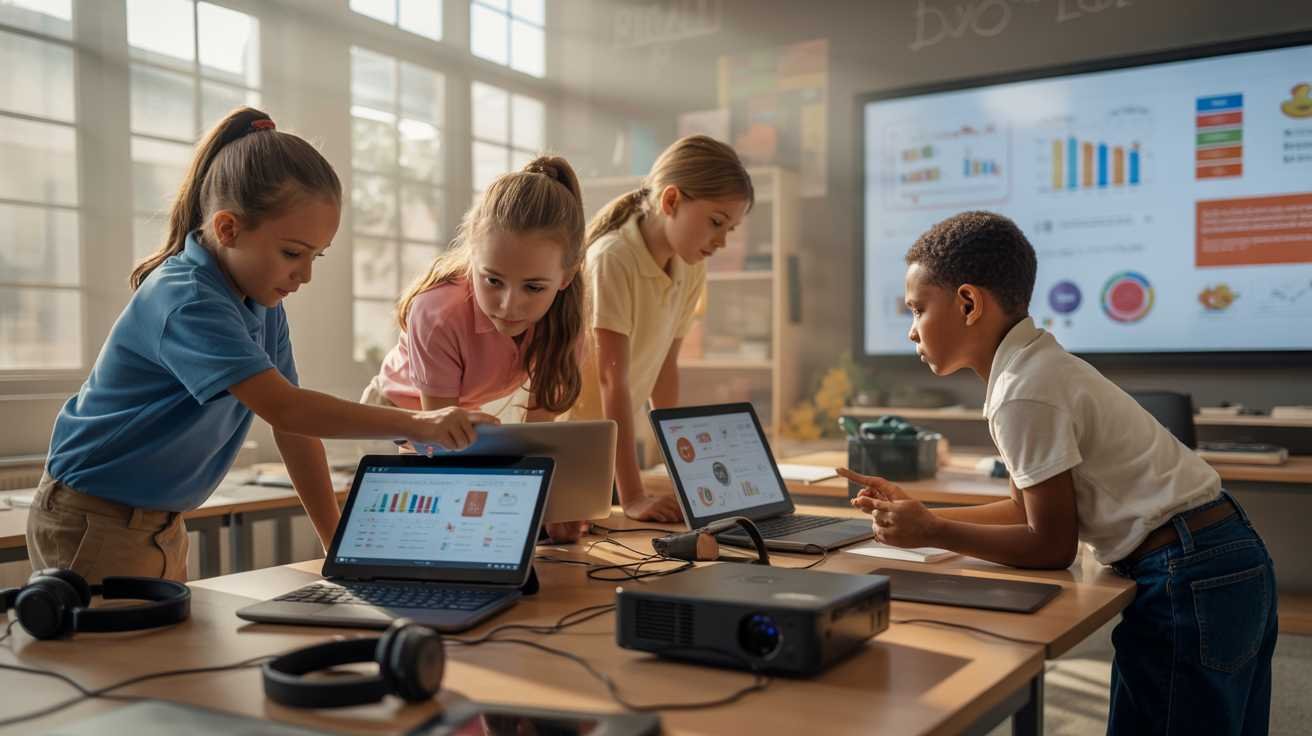
In the fast-paced world of education today, traditional methods of teaching are rapidly being outpaced by the immersive, engaging potential of multimedia resources. Whether you’re an educator striving to elevate your classroom’s learning experience or a student eager to absorb knowledge more effectively, multimedia is the gateway to unlocking a world of rich, interactive, and sensory-stimulating content. The question is, are you ready to take the plunge and enhance your educational experience with multimedia resources? If not, you risk falling behind in a world where educational standards are continually evolving, and time is running out to adapt. Don’t let your classroom or learning experience become obsolete – embrace the future now, or risk missing out.
Why Multimedia Resources are Essential in Modern Education
Picture this: You’re in a classroom, the teacher is explaining a concept, but the lecture alone isn’t enough to capture your attention. Now imagine that same lesson being taught using interactive visuals, dynamic audio explanations, and real-time feedback. Suddenly, everything clicks into place. This is the power of multimedia. In today’s education system, an essay of education goes beyond just words – it’s about creating a multi-sensory learning environment that caters to all types of learners. Whether it’s through videos, simulations, podcasts, or educational games, multimedia can make complex topics more accessible, engaging, and memorable. As educational research continues to highlight, the combination of audio, visuals, and interactivity significantly enhances student engagement and retention rates. If you haven’t yet embraced these tools, you’re missing out on an opportunity to make education more effective, more enjoyable, and more impactful for your students or yourself.
The Power of Visual Learning: Engaging the Senses
Humans are visual creatures, and research has shown that people retain information better when it’s presented visually. For educators, this means integrating charts, diagrams, infographics, and videos into lessons to visually communicate information. The essay of education has long focused on reading and writing, but in the age of multimedia, visual aids have become a crucial element. Imagine students watching an animated video that explains a complex scientific process or interacting with a 3D model that allows them to explore the human circulatory system in real-time. These types of resources not only hold students’ attention but also provide a deeper understanding of difficult subjects. Educators who integrate multimedia visuals can dramatically increase their students’ ability to grasp abstract concepts and retain knowledge for longer periods of time. The future of education is undeniably visual, and those who fail to adapt risk falling behind.
Interactive Multimedia: The Key to Active Learning
Passive learning is a thing of the past. In today’s fast-paced world, students need to be actively engaged to truly grasp and retain knowledge. Interactive multimedia resources, such as educational games, quizzes, and simulations, allow students to not only consume information but also apply it in real-time. This hands-on approach to learning fosters critical thinking, problem-solving, and creativity. For example, imagine students solving a mathematical equation through an interactive puzzle game or simulating the consequences of different decisions in a historical event. These tools provide immediate feedback, reinforcing correct answers and gently guiding students through errors. The result? A more immersive and personalized learning experience that encourages active participation. If you’re still relying solely on traditional textbooks and lectures, you’re missing the opportunity to engage students on a deeper level.
Audio and Podcasts: Amplifying Learning Through Sound
Audio resources have been a hidden gem in education for years, but their full potential is just beginning to be realized. From podcasts to audiobooks to voice recordings, sound-based learning offers a dynamic alternative to reading or watching. Many students struggle to focus on written texts, but audio resources can help them absorb information while on the go. Picture a student listening to a podcast about ancient civilizations while commuting, or an educator utilizing voice recordings to explain complex theories in a language that’s easier to understand. Podcasts, in particular, have exploded in popularity because they allow for a deeper, conversational style of learning that doesn’t rely on visuals. They offer students a chance to listen to experts in the field and gain new insights while multitasking. Don’t let your learning experience be limited by sight alone – audio is an indispensable tool that can significantly enhance comprehension, accessibility, and engagement in the classroom.
Incorporating Multimedia into Different Subjects
Multimedia resources are not just for a specific type of subject. They can be seamlessly incorporated into virtually every area of education. In the sciences, interactive simulations can help students visualize molecular structures or chemical reactions. In history, multimedia resources can bring past events to life through documentaries, 3D models, and virtual reality (VR) tours of ancient civilizations. Language arts can benefit from audiobooks, digital storytelling, and even virtual classrooms where students engage in real-time conversations. Math can be taught with virtual manipulatives or animated tutorials that break down complex equations into digestible steps. Whether you’re teaching STEM subjects or the humanities, multimedia is an indispensable tool that breathes life into your curriculum. If you’re not using multimedia to teach these subjects, you’re missing out on an engaging and more effective way of teaching and learning.
Real-World Application: How Multimedia Transforms Education
The impact of multimedia on education is not just theoretical – it’s being felt right now in classrooms around the world. Educators who embrace multimedia find that their students are more engaged, more motivated, and more successful. For instance, a study by the Bill & Melinda Gates Foundation found that 75% of educators who use digital tools report that these resources increase student engagement and achievement. Furthermore, students who use multimedia resources regularly are better at retaining information and applying their knowledge in real-world scenarios. If you’re still clinging to outdated teaching methods, you’re not just holding back yourself – you’re also holding back your students. The evidence is clear: multimedia isn’t just an option; it’s a game-changer that directly enhances student success.
Addressing the Challenges of Multimedia Integration
Despite its obvious benefits, integrating multimedia into the classroom is not without its challenges. From technical difficulties to lack of resources, the road to full multimedia integration can be bumpy. But these obstacles are not insurmountable. By ensuring proper training for educators and providing access to the necessary tools, schools can overcome these hurdles. The key to success lies in being proactive, adaptable, and creative. For example, educators can start by using free or low-cost online resources, and gradually incorporate more complex tools as they become more comfortable. Schools and educators that embrace these changes will find themselves ahead of the curve in a rapidly changing educational landscape. The time to act is now – don’t wait until you’re left behind in the dust.
Measuring the Impact of Multimedia on Learning Outcomes
As with any educational tool, it’s essential to measure the effectiveness of multimedia resources in improving learning outcomes. Fortunately, data-driven insights are available to show that multimedia has a significant positive impact on student achievement. Studies consistently show that students who use multimedia resources score higher on tests, show better retention of information, and display improved critical thinking skills. For instance, research from the University of California demonstrated that students who used multimedia tools in a blended learning environment performed 30% better than those who didn’t. If you’re still unsure whether multimedia is worth the investment, the evidence speaks for itself. Now more than ever, incorporating multimedia resources is not just a best practice – it’s an essential strategy for improving learning outcomes.
Embrace Multimedia: The Future of Education is Now
In today’s rapidly changing educational landscape, the future is multimedia. If you’re not already incorporating these resources into your teaching or learning experience, you’re missing out on an opportunity to engage, inspire, and transform education. Multimedia offers endless possibilities for enhancing understanding, improving retention, and making learning more enjoyable. Whether you’re an educator, a student, or an institution, the time to embrace multimedia is now. The competition is already moving forward – don’t get left behind. Equip yourself, your students, and your classrooms with the tools they need to succeed in an increasingly digital world. The future of education is in your hands.
If you want to inspire your students, consider incorporating freedom education quotes into your daily lessons to spark discussions and enhance their learning experience.
To learn more about enhancing your teaching strategies, consider integrating tools that promote diversity and accessibility, as highlighted in the context of grigori perelman education for effective classroom management. These resources can empower all learners, ensuring no student is left behind in their educational journey.
If you want to enhance your histology education, consider blending digital resources with printed materials for a more engaging learning experience.
If you want to enhance your teaching methods, implementing multimedia can significantly transform the industrial education system and engage students more effectively.